
In The Next Phase Of AI Video, Storytelling Pulls Ahead of Spectacle
Divyeshu Sinha, Founder and Creative Director at Leap of Faith Entertainment, on the invisibility standard reshaping AI video and why performance and director control define its last mile.
Make Ad World News one of your go-to sources on Google


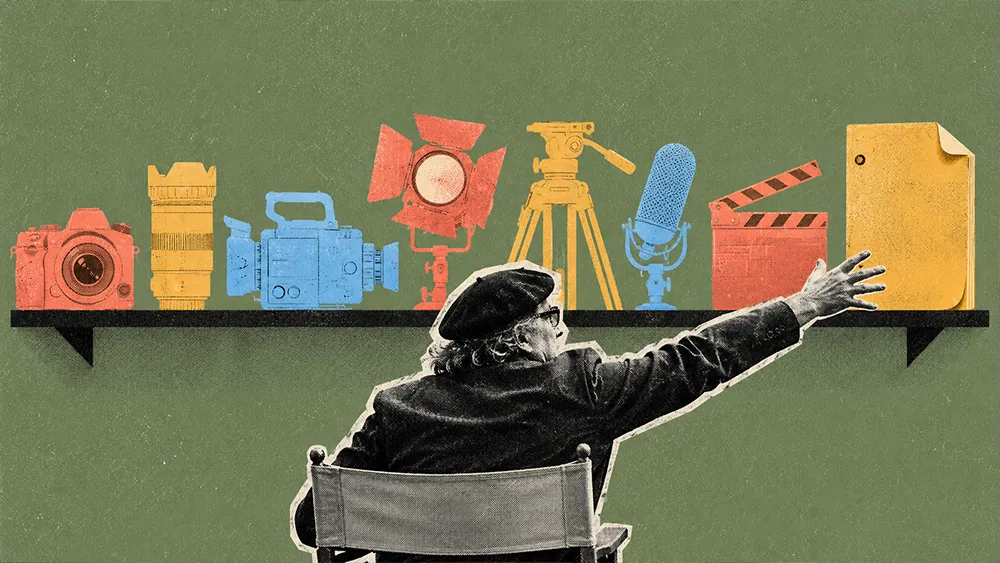
The choice to use AI is like choosing a camera. Some people like a Nikon. Some like a Canon. These are tools. Using multiple tools to your advantage is the best way to go.
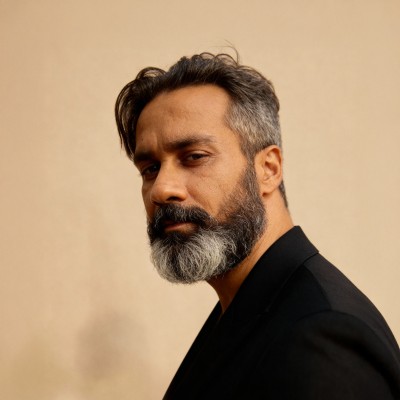
Divyeshu Sinha
The current wave of AI-generated video is dominated by work that wants to be noticed. Hyperreal portraits, morphing dream sequences, and uncanny composites are everywhere on social, and they've done their job by proving the technology can be impressive on its own. The creative ceiling above that work, though, is lower than it looks. Once audiences register the artifact as AI, the conversation shifts away from the story and toward the tool that made it. The brands and creators who will define what comes next are already moving in the opposite direction, treating AI as a means of expanding what's possible, deployed in service of a narrative the viewer is meant to feel rather than parse.
Divyeshu Sinha is the Founder and Creative Director at Leap of Faith Entertainment based in Bengaluru, India. He brings over a decade of experience to his work, and earlier in his career served as an Assistant Casting Director at Yash Raj Films, one of India's major film studios. His perspective on AI-generated video flattens most of the current debate about what the medium is and is not.
"The choice to use AI is like choosing a camera. Some people like a Nikon. Some like a Canon. These are tools. Whatever the purpose of the video is, using multiple tools to your advantage is the best way to go," he asserts. With that framing in mind, the question is no longer whether AI was used to tell the story, but whether the story itself holds up.
When AI is visible, the story loses
The cost of letting AI sit in the foreground is emotional, not technical. Viewers connect to performance, to faces, to the sense that something was made on purpose. When the artifact pulls them out of that connection, Sinha says, the rest of the work suffers. "When you're watching something and suddenly you notice, 'Oh, this is AI,' there's a perception that it's fake. It's not coming from a pure storytelling perspective." The dynamic mirrors what happens in traditional film when a viewer suddenly notices an actor acting. The spell breaks, and attention turns to the mechanism. For brands trying to use video to build emotional resonance, that break is expensive. The audience may finish the scroll, but they didn't feel anything as a result.
Sinha notes that there's a parallel audience for whom AI itself is the point. Members of this group scroll for novelty, and they reward the next visually impossible thing regardless of how it was made. He sees both audiences as real, but draws a clear line between them. "There is a set of people who want authentic things. For them, the AI should be invisible. They want to feel the story. When they don't notice that it's AI, they connect more."
The persistent AI giveaway
Two years ago, the giveaways were technical. Shot consistency drifted between frames. Lighting did not behave like real physical lighting. Hands and eyes betrayed the model. Most of that is gone now. "Models have solved that," Sinha says. "I would say ninety-nine percent of the time, the images and characters are consistent. You really can't distinguish between actual footage and generated footage unless there's some physics involved, some motion that looks odd." The remaining tell, he says, is human. Models can generate a believable actor in a believable room, but they still struggle to generate a believable performance. "The dialogues, the delivery, the way an actor emotes. The performance is a big giveaway. We can cheat around B-roll, consistency, over-the-shoulder shots, but today, performance is the biggest tell that it's AI."
The same gap shows up in any sequence that requires director-level control. Generative tools can produce action and motion that looks dynamic, but the creator surrenders precision in the bargain. "Seedance does a wonderful job with action, but you lose control. It's up to the model how it cuts. If you want choreography of an action sequence or a dance sequence, that's still missing right now." The implication for creative teams is sharper than the surface debate about realism suggests. The unsolved problems are the ones that matter most for narrative work: emotional performance and authored motion. Until those gaps close, AI will continue to do its best work in roles where it does not have to carry the dramatic weight alone.
Where brands should actually deploy AI today
For brands evaluating where to put AI to work first, Sinha's answer is unambiguous. Start with social, where the bar for hyperrealism is lower and the appetite for entertainment is high. He advises using it for performance ads where speed and variation matter more than the kind of emotional depth a flagship campaign requires. "Social media is the biggest platform. You put a few pieces of content out, and you get the reaction and the results quickly. If you're planning something big, before you storyboard, you can have a rough AI draft. That saves you time and a lot of money."
The split between brand-initiated and creator-initiated AI work has also shifted. Sinha estimates the inbound now runs roughly fifty-fifty between brands asking for AI video specifically and his studio proposing it where the concept fits. It's a different posture than the market held even a year ago, when most AI video work was creator-led and brand-skeptical. The takeaway is that AI is now mature enough to support the parts of the production process where speed, iteration, and cost compression matter most, without anyone needing to know it was involved.
A layered toolkit, chosen by the director
In Sinha's view, the next chapter of AI video looks less like a single platform race and more like the existing landscape of cameras, lenses, and editing software, where professionals pick the tool that fits the shot. He notes that many in the field already work that way, layering models and platforms across a single project depending on what each does best. "You have all these tools. Why not use all of them to get what you want?" The layered approach reframes what professionals are actually selling, which is increasingly the judgment that decides which model to use, where to combine outputs, and how to direct the parts AI cannot yet handle on its own. As the models converge in quality, that judgment becomes the differentiator.
The honesty layer matters too. Sinha is direct that the invisibility standard is not about deceiving audiences, but about clearing the friction between the viewer and the story. "The goal is not to fool people. As a creator and a founder, my goal is to tell better stories with whatever medium is available," he says.