
Super Bowl LX Becomes Launchpad For Ambient AI In Experiential Marketing
After a massively successful AI activation at Super Bowl LX, Jerry Li, Co-Founder & CEO of LiveX AI, discusses the shift to experiential marketing and his vision for the future of human-centric AI.
Make Ad World News one of your go-to sources on Google


You're on your computer, you're on AI almost every day for your work. But then when you go to a physical store or physical locations, you don't have AI.

Jerry Li
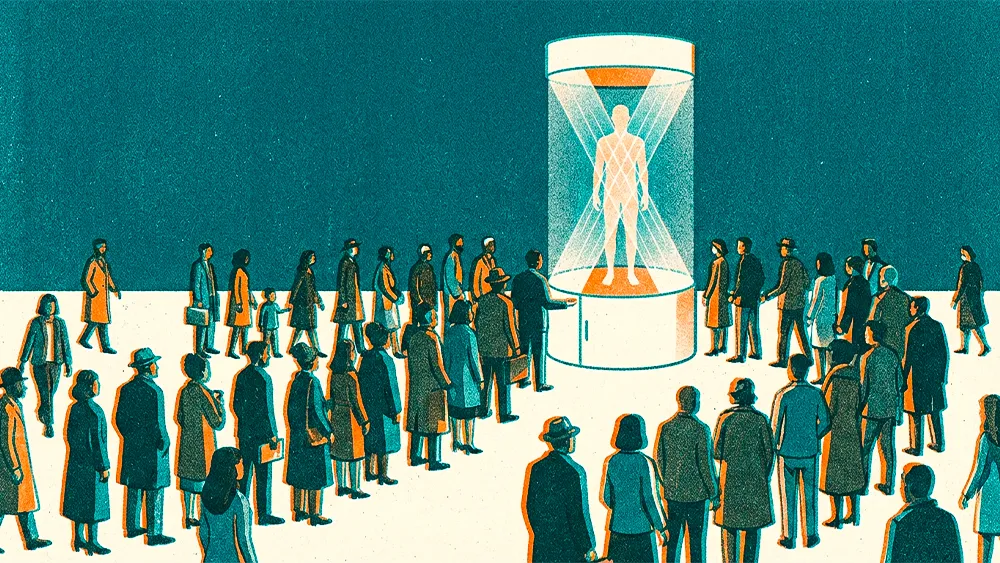
At Super Bowl LX, the classic static model of fan engagement at live events was replaced by an interactive AI experience unlike anything seen before. Debuting their interactive AI holograms for the first time, LiveX AI's internal team expected a modest 500 users. Instead, they were met with thousands of excited guests ready to engage as they featured a fully interactive hologram of Christian McCaffrey receiving the 2026 Bart Starr Award. The turnout showed that experiential marketing is becoming a powerful alternative to passive consumption in creative advertising.
At the center of this new approach is Jerry Li, the Co-Founder and CEO of LiveX AI. With partnerships with firms like NVIDIA and Google Cloud, Li is a key figure in a growing trend within AI technology. His deep-tech background, ranging from leading a quantitative trading venture applying machine learning to the stock market to serving as a Software Architect at Cadence Design Systems, has forged his belief in a fundamental, human-centric philosophy.
"It's really about putting people first. AI is a technology, but it should be used to enhance the customer experience. Essentially, AI is for serving people and helping them enjoy their lives, not replacing them. That is the whole design concept of our products: If AI can make an experience better, we should do it. If not, we shouldn't," says Li.
Intuitive design: That philosophy is clear in the product's intuitive design, proving so effective that the support team was redundant. "We assigned eight people to our machines, but after the first morning, we realized we didn't need to be there," Li says. "We didn't have to teach anyone how to use it. People knew how to use it just by seeing others." That's the model Li is now scaling for other large-scale events, including the upcoming FIFA World Cup.
High engagement: "Almost one-third of the people who went to the Moscone Center engaged with us. That scale is just crazy. People were waiting twenty minutes to engage with the AI machine."
Li’s core mission is to bridge what he calls the "digital and physical gap" by bringing AI from the desktop into the physical world. He sees this expansion into new out-of-home environments as a foundational step toward an infrastructure of ambient AI that makes everyday life more enjoyable, as many in the marketing sector race to claim a stake in what some are calling an AI land grab.
Coming to a cafe near you: "You're on your computer, you're on AI almost every day for your work. But then when you go to a physical store or physical locations, you don't have AI." Li envisions we'll soon see similar experiences in retail stores across the country, not just live events. "You will see a similar experience happen in retail stores, in coffee shops. Essentially, wherever people are hanging around with time to make their lives more enjoyable."
Looking ahead, Li says innovation is about advancing on two fronts. The first is pushing the boundaries of human-like interaction to create better AI companions. The second is changing the form factor of AI. "Instead of a screen, can it be a robot? Can it be something no one has seen before, yet people still feel comfortable interacting with? That's the direction my 'wild imagination' is pushing us." His vision includes technologies like the growing holographic display market, and he acknowledges that a primary challenge remains figuring out "how to bring robotics into our daily lives."