
New Advertising Pillars Emerge as OpenAI Prepares to Challenge the Google-Meta Duopoly
As AI ad networks emerge, a marketing expert explains the shift from keywords to conversational advice and why brands must now unify their PR, SEO, and content.
Make Ad World News one of your go-to sources on Google


The most interesting component is that an ad on ChatGPT won't feel like an interruption. Unlike a Meta ad, it's going to come across like natural advice from a friend.

Jamieson Webking
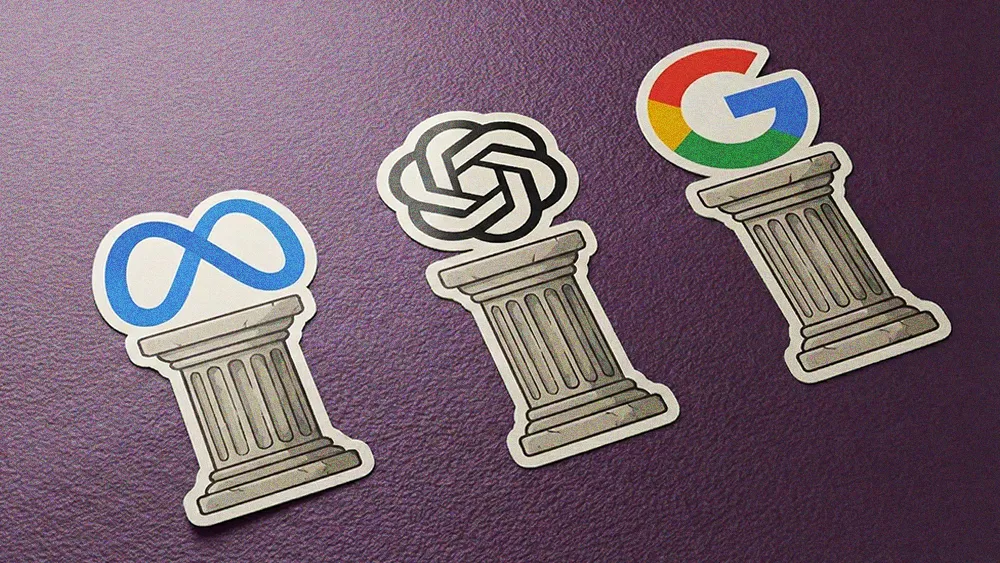
Digital advertising has long been a two-party system: Google’s intent-driven search and Meta’s identity-based social. Now, a third player is entering the ring. As platforms like OpenAI begin to build their own ad networks, many marketers are staring down the limits of keywords and feeds, exploring where attention and creative discovery will live in this new environment.
This move toward "assistant-based" discovery is forcing a strategic reckoning. For those grappling with traffic fragmentation and rising acquisition costs, the challenge is evolving from capturing intent to earning trust within a conversational context, where success is defined by delivering value.
For practitioners like Jamieson Webking, who handles Medical Digital Marketing and Technology at Glacial Multimedia, this evolution isn't a distant theory. From his vantage point at a specialized agency navigating highly regulated industries, he sees the rise of LLM advertising as an imminent reality that demands a new playbook, blending the art of brand building with the science of machine-readable content.
Webking predicts the future of LLM advertising will be more like Meta than Google, but with a unique podcast-like twist. While Google captures a moment of active intent, the next generation of AI will be powered by memory. "AI platforms like ChatGPT and OpenAI have memory built into them. ChatGPT is going to remember all your previous conversations. It's going to know that you're a runner with foot issues because you've talked about that in a previous conversation about training," he says.
Your new 'ad'viser: That deep understanding, combined with real-time conversational context, creates a powerful new kind of interaction. Much like programmatic podcast ads that scan a transcript's topic, LLM ads can be inserted based on the immediate subject of discussion. When an ad is delivered seamlessly within a helpful conversation, its nature changes, transforming from a disruptive pitch into a useful suggestion. "The most interesting component is that the ad won't feel like an interruption," Webking predicts. "Unlike a Meta ad, it's going to come across like natural advice from a friend."
Parroting views: But this relationship carries a key trade-off. Users can anthropomorphize these tools, creating an agentic connection that doesn't exist with a transactional platform like Google. A key risk, then, emerges in the gap between perception and reality. One study found that AI agents can be easily led to make purchases while ignoring visual cues designed for humans. "A lot of people feel like ChatGPT is an oracle, when really it’s just a parrot. It's like that friend you trust who recommends a movie they haven't actually seen. They're just passing on a recommendation they heard somewhere else," he explains.
The rise of AEO acts as a force pulling SEO, brand marketing, and public relations back into a unified strategy. The "parrot" will synthesize information from every available source, including owned profiles, third-party listings, earned media, rewarding brands that present a clear, consistent, and authoritative identity across all of them. AEO isn't inventing a new field so much as it is connecting disciplines, like brand marketing and PR, that were historically tangential, Webking explains.
The move away from interruption and toward integration is already taking shape. Webking believes the first version of a true LLM advertising network will arrive as early as 2026, pointing to OpenAI's active recruitment of ad-tech engineers as a leading indicator. The groundwork is already being laid, with early examples like ChatGPT's integration allowing users to purchase Walmart products directly within the chat, signaling a move from pure information gathering to conversational commerce.
The #ad question: However, the rapid rise of a new ad platform raises immediate and difficult regulatory questions. If an AI's paid recommendation is perceived as a friend's advice, how can consumers distinguish between an authentic suggestion and a sponsored placement? The launch of OpenAI's personal ChatGPT agent, capable of acting on a user's behalf to complete tasks, brings these questions into sharper focus. "Just as Google and Meta have a 'Sponsored' tag, ChatGPT will need its own version of that flag, whether it's an asterisk with a disclaimer stating that some recommendations are partnerships," Webking advises. "They will have to make that disclosure clearly visible so the results are not manipulative."
Success in this new era may be defined by a brand's ability to be genuinely helpful. The goal becomes less about winning a keyword auction and more about earning a place in a trusted conversation. As Webking puts it, the strategy comes down to answering a single, focused question: "What's the pain point somebody's going to have in a conversation where a friend would make a recommendation? That's the moment that you're trying to be visible."