
Tracking the Evolution of Legacy Media as AI and CTV Continue to Undercut Traditional Models
Rio Longacre, Partner and Head of Advertising and AdTech at Credera, warns that legacy media is missing another disruption as creators, CTV, and AI reshape the industry.

Make Ad World News one of your go-to sources on Google


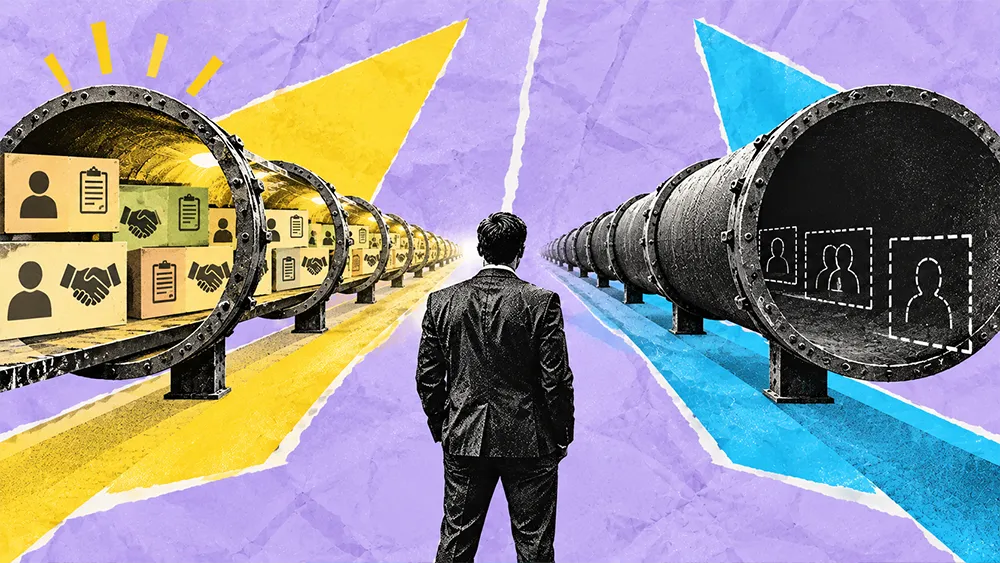
You have two different worlds. At AdTech events, you see all the new players trying to disrupt broadcasting and publishing. But the legacy players who are being disrupted are just on an island, continuing business as usual.

Rio Longacre
A widening divide is becoming impossible to ignore in the media world. One side is rushing toward creators, CTV, and AI-fueled formats that reflect how audiences already behave, while the other side is still debating rules built for a world that has already faded. That split exposes the strategic blind spot keeping many legacy publishers and broadcasters operating as if the future has not already arrived, even as the rest of the industry moves on without them.
We turned to Rio Longacre, an executive with two decades of experience in digital strategy and advertising technology, to make sense of the divergence. As a Partner and Head of Advertising & AdTech at global consulting firm Credera, a member of the Fast Company Executive Board, and the former global lead for Advertising & Marketing Transformation at Slalom, Longacre has spent his career guiding companies through major technological and strategic changes. His diagnosis? A stark separation between the disruptors and the disrupted.
"You have two different worlds. At AdTech events, you see all the new players trying to disrupt broadcasting and publishing. But the legacy players who are being disrupted are just on an island, continuing business as usual," says Longacre. According to him, the biggest threat isn't competition from streaming giants, but the willful ignorance of incumbents who are blindly conducting business-as-usual.
The streaming shadow: He points to the rise of CTV as a massive financial disruption, directly jeopardizing the established business models of traditional broadcast and cable. "If CTV takes off and players like Netflix, Apple, and Amazon win, what's the downstream effect?" he asks. "Do all of the networks go out of business? Maybe. Do all the big news publishers have their models erode completely? Probably."
History repeats itself: What makes this pattern of inaction concerning, he notes, is that many of these publishers possess incredible assets—a sterling reputation, world-class journalists, and a deep inventory of content—that they have repeatedly failed to leverage when faced with technological change. "Legacy publishers have missed every major disruption from Craigslist to Google to Meta, and now AI search is hitting them again at full speed," says Longacre. The response from many publishers, he adds, has been to pursue individual legal challenges and one-off content deals for AI training data instead of negotiating collectively.
But the problem runs deeper than just publisher inaction. The very mechanics of digital advertising are broken. The ecosystem that funds the internet has become dominated by a handful of massive, opaque walled gardens whose dominance has helped foster a system where the appearance of success, often measured by vanity metrics like views and clicks, is often prioritized above real business outcomes—a setup that has tilted the digital advertising market in their favor.
Garden variety growth: "Over the last ten years, the open web has grown by maybe 50%, while the walled gardens have grown by 400% or 500%," he explains. "Most of the actual growth has gone towards the walled gardens like Meta and Google. That's because their black boxes make it easy for them to prove outcomes if those outcomes are just vanity metrics."
Longacre says the focus on publisher failures and platform opacity is often misplaced, pointing to a different, more powerful source of inertia: the brands themselves. The system persists, he argues, because not enough of the people funding it have demanded change. He notes that many marketers exhibit a willful ignorance, declining media audits because they are afraid to discover they've been paying for fraudulent traffic or that an agency they trust is underperforming.
Ignorance is bliss: "There's a fear of finding out. I've seen marketers who don't want to know that they've been paying for fraudulent traffic or that their agency is underperforming, because it reflects on choices they made years ago. But CMOs complain about not having a seat at the table with the CEO and CFO. Unless you become a better financial steward of the money you're given, you shouldn't get that seat," he states. "You need better accountability."
The solution, Longacre suggests, begins with a fundamental change in accountability, with brands now demanding a new kind of collaboration. In practice, that means moving away from the cycle of chasing cheap metrics and toward a commitment to transparency and mutual respect between brands and their agency partners.
"If a brand is only paying for pure performance, then looking at the results may be enough," Longacre concludes. "But when an agency is handling a mix of buys and delivering the metrics that justify them, brands need checks and balances to confirm the picture is accurate. That requires fair compensation for quality work and a commitment to transparency instead of cutting fees until nothing works."