
Streaming Platforms Race To Collapse The Funnel As Shoppable CTV Gains Ground
Jean Carucci, Principal of Carucci Consultants and U of Digital Expert Network member, explains why frictionless, remote-driven purchasing is becoming non-negotiable for streaming partners and why advertisers need to start demanding it.

Make Ad World News one of your go-to sources on Google


Streaming is going to collapse the sales funnel. From awareness straight to action.
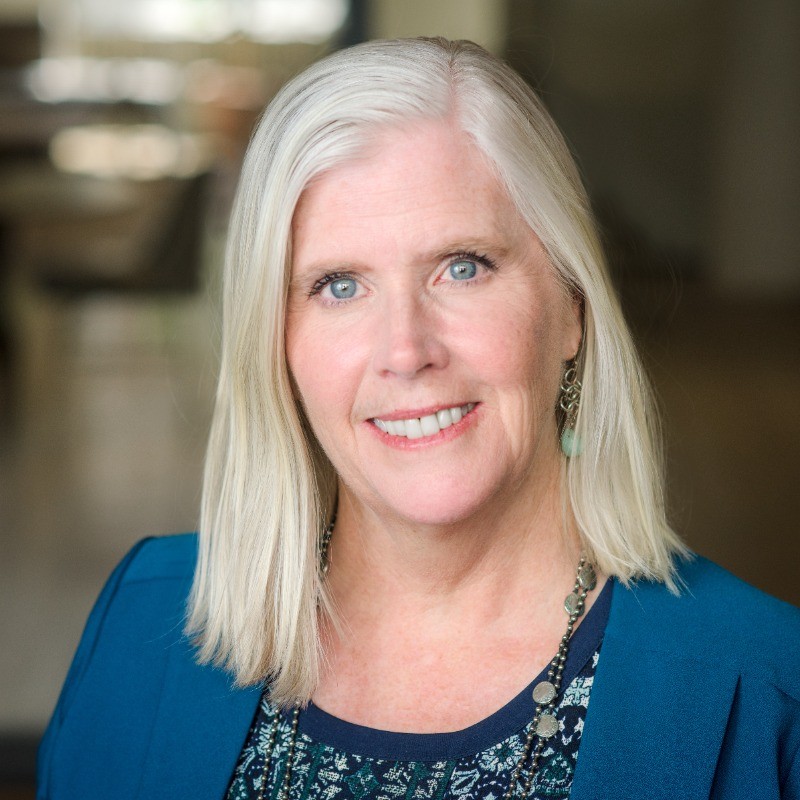
Jean Carucci
Streaming advertising is moving past the awareness play. The platforms assembling closed-loop commerce systems, where a viewer can go from watching content to completing a purchase without leaving the screen, are pulling ahead of those still relying on standard fifteen and thirty-second spots. For advertisers, the question is no longer whether shoppable CTV works, but whether their streaming partners can actually deliver on the promise.
Jean Carucci, Principal of Carucci Consultants and authoer of the Substack column Streaming Strategy Scholar, is a streaming strategist with deep experience at the point where product, advertising, and platform strategy meet. She spent seven years at Warner Bros. Discovery launching 18 TVE and OTT applications, helping roll out discovery+ and Max, and managing new digital ad product activations across the portfolio. That work gave her a front-row view of how streaming moved from a content distribution channel into a measurable, interactive advertising environment. Now, she sees the next shift coming from platforms that can shorten the distance between watching, wanting, and buying. “Streaming is going to collapse the sales funnel. From awareness straight to action,” says Carucci.
Amazon built the blueprint
Carucci points to Amazon as the clearest example of what fully integrated streaming commerce looks like today. Their closed-loop system connects purchase history, timing, and predictive needs into a single experience.
"If they have your first-party data, they know the last time you ordered diapers," Carucci says. "They may pop up and say, 'Are you running low? A new brand will give you 20% off.' That's not intrusive at all. That's frictionless. And that's where the connected part of CTV is really living up to its potential."
Carucci identifies live sports as the most natural fit for in-content commerce. She describes watching Thursday Night Football on Amazon Prime and seeing new player jerseys with no way to buy them. "If you're a fan, it would be great that you could click on a lower third, get the jersey now, boom, in cart, delivered in two days," she says. "That's instant gratification without being heavy-handed like a home shopping network."
Everyone else is assembling the pieces
The rest of the market is racing to build what Amazon already has. Carucci sees three paths converging.
"Walmart bought Vizio, and I thought, this is it. This is the competition to the Amazon world," Carucci says. "I don't think they're quite there yet. But they're headed there." The Walmart-Vizio integration gives the retailer both the hardware footprint and the data layer to compete on shoppable inventory.
Platforms without their own commerce layer are partnering to assemble one. Roku aligned with Amazon's DSP, and retail media integrations with companies like Instacart are bringing shopper data into environments that previously only had viewership data. "You bring first-party data together with what Roku has and you can sort of combine them," Carucci says.
Beyond CPG
The shoppable opportunity extends well past consumer packaged goods. Carucci maps it across categories that most advertisers have not yet explored on CTV.
"You can make it easier for people to align with their local Toyota dealer and schedule a test drive seamlessly on the large screen TV," Carucci says. "You can watch content about the state of Texas and see a Travel Texas ad that lets you plan your itinerary." The key is contextual alignment: matching the offer to what the viewer is already watching so the commerce moment feels organic.
"What if you're talking about planning for retirement or insurance for your family?" Carucci says. "There's a way to understand the life cycle of the consumer and tap into that." The call to action does not need to be a purchase. It can be a quote, a consultation, or a download, as long as the creative makes it actionable.
Advertisers hold more power than they think
Carucci argues that the power hierarchy in streaming runs from viewers to advertisers to platforms, in that order, and that most brands are not exercising the leverage they have.
"When selecting a partner, understand their tech stack, your ability to bring first-party data, and your ability to be part of an engaging, active experience, not just a passive one," Carucci says. In a market of walled gardens and consolidation, she warns advertisers to verify addressable audience numbers before committing spend.
"Advertisers hold significant power over streamers. They need to start demanding these capabilities and transparencies," Carucci says. "It shouldn't be a black box." If the partner cannot deliver shoppable, measurable, interactive capability, "you shouldn't even be talking to them."
The next six to twelve months will separate the platforms that perfect the shoppable journey from those that lose viewers to friction. Carucci also sees a surge in creator-led and user-generated content that will become shoppable by default. "AI is really increasing the demand and expectations for consumers," she says. "And we in the media industry need to keep up the pace to accommodate those expectations."