
AI Pushes Creative Agencies To Compete On Human Judgment, Taste, And Imagination
Jyrki Poutanen, co-founder and Chief Creative Officer of United Imaginations, walks through how AI is redrawing the creative agency landscape by democratizing execution.
Make Ad World News one of your go-to sources on Google


AI has democratized execution, not imagination. It has dramatically lowered the barrier to entry and gives more people access to capabilities that previously required many people and special skills.
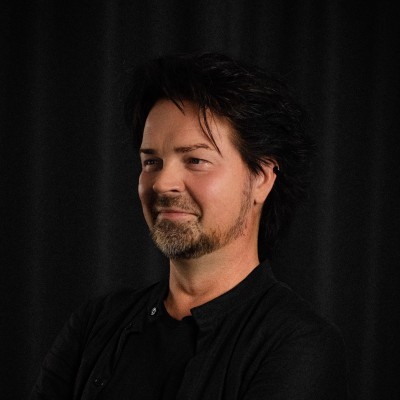
Jyrki Poutanen
Generative AI has made basic creative execution cheap, fast, and available to almost anyone with a laptop. As common production barriers fall, more brands are pulling work inside their own walls and recalibrating their external spending for the long term, leaving agencies with a fair question about what they are actually selling. The answer for most is no longer output, but the judgment underneath: taste, curiosity, curation, and a unique point of view about why the work should exist in the first place.
Jyrki Poutanen, Co-Founder and Chief Creative Officer of United Imaginations, has spent more than 25 years navigating exactly the kind of market correction the industry is working through now. His agency ranks among Finland's most internationally awarded young shops, and Poutanen himself sits on Adweek's list of the "100 Most Creative People in the World" with 10 Cannes Lions to his name. He's not fighting the current wave of change, having built generative tools into his agency's workflow from the start. An early Midjourney project produced a series of unnatural, highly conceptual floral assets that won a major festival pitch. The process confirmed his working theory that the technology is a baseline multiplier that still needs a human to finish the job.
"AI has democratized execution, not imagination. It has dramatically lowered the barrier to entry and gives more people access to capabilities that previously required many people and special skills," says Poutanen. The impact of this evolution lands first on agencies built entirely around execution. In Finland, shops built to push standard deliverables through a production pipeline are already feeling the pressure. Cheaper execution at scale is forcing production-focused models to defend their overhead against clients who can now produce similar work in-house. Value at the agency level now comes from strategic thinking, creative direction, and ideas the tools cannot produce.
Fewer chairs, sharper thinkers
AI is pressuring production-focused agencies at one end of the market while expanding what individual creators can produce at the other. Toolkits that once required a full production team are now available to solo operators, and Poutanen watches the effect play out at his own kitchen table. "My spouse, for example, has always been a freelance graphic designer. What she has experienced this year is she made as much money in half a year as she made in the entire last year," he says. "To me, that tells the story of the one-woman army becoming a creative force. They can scale what they're doing, and we see that at home now."
Poutanen built his own agency to 40 people in four years, but he now openly questions what the optimal size of a firm looks like. He predicts a future where clients hand-pick elite solo practitioners who assemble bespoke teams around them for specific work. In that model, human judgment and strategic storytelling outrank headcount.
At Cannes Lions this year, Poutanen watched the argument crystallize from inside the jury room as he judged the festival's new AI-driven subcategory in Design. His own agency and Finnish rival Bob the Robot both took home Lions for the country, and Poutanen's read on what separated the winners at the top of the field was human craft applied at every stage of production. "As AI makes competent execution increasingly accessible, exceptional craft is what was shining," notes Poutanen. "The winning work wasn't simply a clever prompt or interesting use of technology, it reflected deep thinking, countless creative decisions, and extraordinary refinement. For example, the Apple TV case that won the Grand Prix is all human-made."
Passion at the speed of AI
Great creative work usually has to survive a gauntlet of budget cuts, client pushback, and internal skepticism, all of which require someone who is invested enough in the idea to push it through. Algorithmic tools can't replicate that investment, which is why practitioners like Poutanen frame the guardianship of a brand's core identity as the durable value proposition creative agencies still control. Technology can produce almost anything, but it doesn't care about the outcome. "Another thing it's missing, which is why you can't take entire control of the creative process yet, is passion," Poutanen observes. "Creative work requires somebody who's willing to go through rock and fire to get that idea through. AI doesn't love anything, and creatives do, and that's why they push."
The paradox that makes the human argument stronger is that the tools also make human creativity more productive, freeing practitioners from the mechanical parts of the process to spend more energy on judgment. Handing off early-stage mockups and reference work to machines gives teams a faster way to test and discard directions before committing to a concept, which is where Poutanen sees the operational win. "We are faster now, we're more efficient. One person, a copywriter, can make creative outputs that are very visual at the point where it goes into production. It equips us to rule out things much quicker and get to better outcomes and outputs," he concludes.