
Ad Industry Shifts To Hybrid AI Production To Balance Scale And Creative Taste
David Tamayo, Creative AI Director at Prose on Pixels, sees AI video ads succeeding only when human craft leads, with hybrid workflows scaling content without losing trust.
Make Ad World News one of your go-to sources on Google


If the ad is well done, well written, and well crafted, it will work. You can and should blend both AI and traditional methods, to varying degrees based on the project.
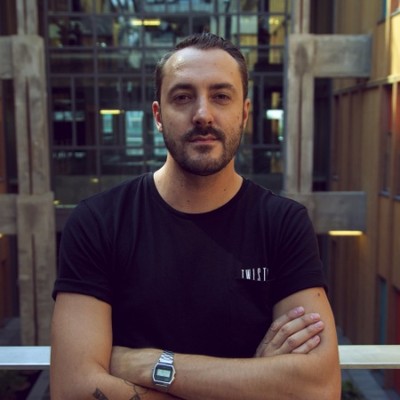
David Tamayo
Generative AI has arrived in video advertising, and its first impression hasn’t been subtle. The recent Coca-Cola holiday spot made the technology’s growing pains visible to a mass audience, with viewers calling it "fake" and "bad" before even debating how it was made. That reaction matters, as it reframes the conversation away from novelty and toward trust, craft, and execution. The question facing brands isn’t whether AI should replace human creativity, but how to use it without losing the emotional credibility that makes an ad work in the first place.
We spoke with David Tamayo, a creative leader whose work is built on that hybrid model. As the Creative AI Director at Prose on Pixels, Havas' global content-at-scale network, Tamayo’s perspective comes from a career as both a hands-on maker and a strategist. He has held senior roles at top-tier advertising agencies like BETC, Havas, and BBDO, and served as Chief Creative Officer for the French media company Ulyces.co. For Tamayo, there is no single right answer—only the right blend of tools for the job.
"If the ad is well done, well written, and well crafted, it will work. You can and should blend both AI and traditional methods, to varying degrees based on the project. There's no right answer because everything depends on the story and the budget," says Tamayo. For him, the Coke ad wasn't a misstep but an unavoidable part of a "learn-by-doing" process. Because this is the first time an innovation has moved so fast, he believes waiting for perfection is a strategic error. Inaction is the greater risk. "It's not going to disappear," says Tamayo.
Let's be honest: The question of authenticity, Tamayo says, has less to do with whether a spokesperson is human and more to do with whether the story feels honest. "People don’t connect to pixels or faces, they connect to narratives that feel consistent and intentional," he explains. From that perspective, he doesn’t see a sharp line between AI ambassadors and today’s influencer economy. "Most influencers are already paid to perform belief," he says, noting that audiences still engage if the message feels coherent.
Truer than fiction: He also points out that this kind of connection isn’t new. "People have built emotional bonds with fictional characters for decades, especially in video games. If the character is well written and treated with care, the connection is real, even if the person isn’t."
This capability is contributing to a change in advertising strategy. In many sectors, the era of the single, big-budget campaign is giving way to a demand for a high volume of customized, multi-platform content. AI is emerging as a tool to meet this demand, driving a convergence of creative and media that allows brands to explore new creative directions and execute extensive A/B testing at scale.
New year, new capability: "The ability to do talent swaps in video is mind-blowing," Tamayo says. "From a brand's perspective, you can create one core video message, then change the language, swap the talent, and alter the background to target anyone you want. This is a big thing that's going to happen in '26."
Behind the scenes: While much of the public focus has been on high-effort creative work, Tamayo explains that the biggest efficiency gains are found in a less-discussed area: post-production. Here, AI helps brands pre-visualize and validate concepts, create new business opportunities, and produce work that looks like it had a high-quality budget, even when it doesn't. "To prove a point, I showed a project to our producers for a cost estimate. They said it would require at least $100,000 and a month of work. Using AI tools, I completed the project in four hours by myself. It shows the real savings are in post-production, even more than in the creative part."
For Tamayo, the technology is inseparable from the culture of the creative industry itself. He believes creative professionals must take ownership of these new tools to ensure that quality and craft remain central to the work. "AI needs to stay in the hands of creative professionals," he concludes. "We need our 3D artists, motion designers, and composers to master AI to keep the expertise—and the quality—within the industry. This is where you see the difference. A skilled editor using AI will create something dynamic and well-edited, not just a sequence of videos. I don't want people with real talent to lose their jobs to someone who simply has access to a tool but lacks the creative taste."
It creates a new paradox for creative professionals: a tool capable of generating infinite variety also risks creating a world where everything looks the same. In an age of overwhelming content, the ultimate task remains what it has always been: to create work that stands out from the noise, connects with an audience, and tells a compelling story.