

Platform-Native Creative Drives Higher Attention And Better Outcomes Across Screens
Ronak Shah, Senior Product Marketing Manager at InMobi Advertising, says most advertisers buying space across screens without a nuanced strategy behind it are leaving significant performance opportunities on the table.
Make Ad World News one of your go-to sources on Google


Stop thinking of yourself as an ad agency. Start thinking of yourself as a content brand.

Ronak Shah
Omnichannel advertising only works when each screen does its job. CTV can deliver the cinematic, immersive storytelling brands need, but too many campaigns still treat mobile, desktop, and big-screen placements as interchangeable surfaces for the same creative. That misses the real opportunity: building a connected sequence where CTV creates attention, mobile captures intent, and every format moves the customer closer to action.
Ronak Shah, Senior Product Marketing Manager at InMobi Advertising, believes the opportunity here is less about adding channels and more about creating platform-native content. Drawing on a background in cross-screen attention research and a stint at Jio Creative Labs where he drove nearly $19 million in business value, Shah views omnichannel as a timeline of connected experiences deserving of thoughtful strategy and considerable budget. He tracks how a brand appears in an interstitial mobile ad, from how the message resurfaces on connected TV days later, to how it lands again when someone is back on a desktop browser. That sequence, he argues, is the difference between ads that people ignore and ads that convert.
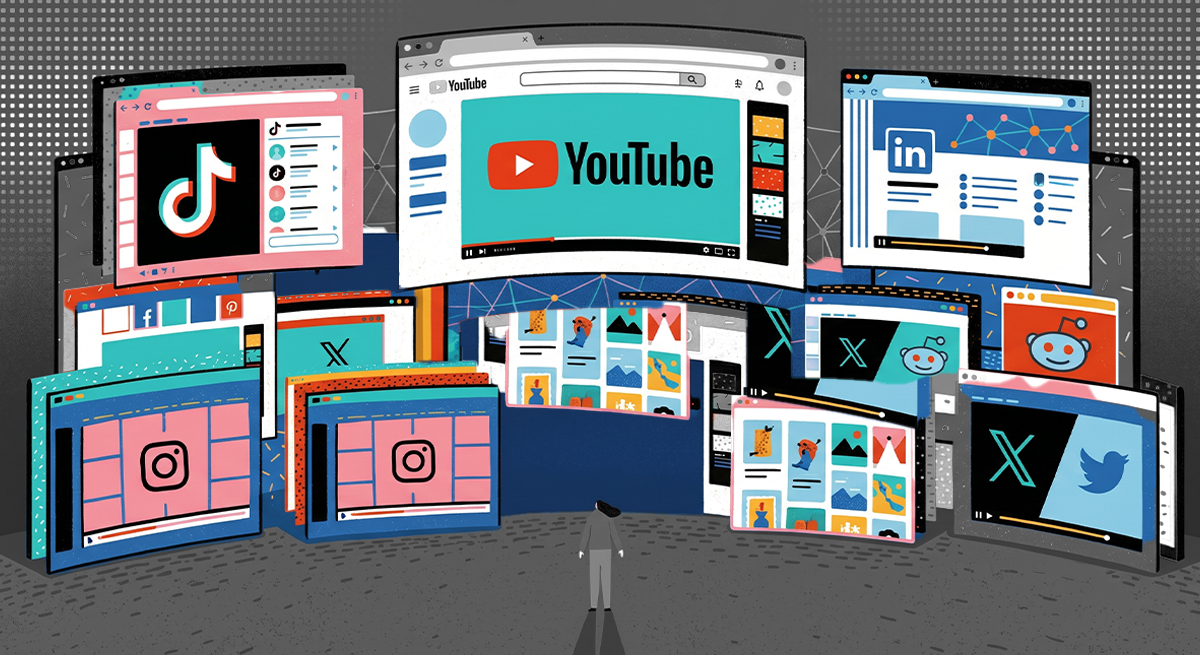
"Stop thinking of yourself as an ad agency. Start thinking of yourself as a content brand. Surface-agnostic strategy is a myth. If you're creating an ad for CTV, earn the living room. If you're on mobile, earn the scroll. If you're on a desktop, earn the click. Consumer engagement is a function of consumer experience, and the brands that understand that are the ones converting attention into outcomes,” Shah says. Engineering this shift starts with understanding how the platform itself shapes the buyer's mindset.
Fighting format fatigue
Shah suggests evaluating a campaign based on two specific levers: how many distinct touchpoints a campaign creates and how much value each interaction delivers. "If I show you the same ad five times, you are obviously going to be annoyed. But if I can tell you the same message in ways that are native to the platform you're seeing it on, that frequency cap can actually go higher." The goal, from his perspective, is to make every touchpoint feel worth the consumer's attention. "An ad opportunity is ideally a transaction between me and the consumer. If I am able to solve for these two metrics, I feel I'll be doing complete justice to the media endeavor."
Despite the data spelling out mobile's impact on consumer behavior, ad dollars are heavily tied to big screens. Shah’s team recently ran studies with an attention measurement partner showing that in-app video ads consistently capture some of the strongest attention scores across formats. But CTV is still a crucial ad space in the omnichannel ad experience. In his framework, big screens often excel at immersive storytelling, while mobile picks up the high-attention, action-oriented work.
The ultimate value of mobile, Shah clarifies, is its ability to keep a viewer's undivided attention. "While your ads are going on CTV, what are you doing? You might be looking at your phone. But when you're on your mobile device, there is very little avenue for you to look away."
So why aren't budgets reflecting the power of the small screen? He explains that many planners still treat mobile as synonymous with social media, defaulting to Meta and TikTok while overlooking the wider ecosystem of retailer apps and mobile web environments. That's a significant blind spot, because digital-first storytelling often reaches consumers much closer to the point of purchase, where intent is higher and action is more likely.
Overcoming the safety reflex
He also points to an understandable caution around invalid traffic and Made for Advertising environments. But once buyers actually look under the hood of modern programmatic controls, the picture changes. Today, programmatic supply is typically filtered through behavioral signals such as session depth and click patterns, alongside stricter publisher vetting and third-party verification before an ad ever runs. The safeguards are there, many planners just don't know about them.
"If there is any sort of risk that you sense, naturally, just psychologically, you're going to decide that maybe for now you're okay with social," Shah says. "Unless there is a conscious understanding of this ecosystem, it is very difficult. It's one of those things: I am afraid of what I don't know," he adds, noting that planners who take the time to understand programmatic controls consistently find the risk far lower than assumed.
Embracing a "content brand" mindset
Moving past that initial hesitation makes it easier to build platform-native creative. Executing well, in Shah's view, means designing for the consumer's frame of mind on each device rather than resizing a single asset across screens. He suggests adopting a content brand mindset. From that perspective, each screen has a different creative job to do. Television excels at immersing viewers in story. Mobile is often better suited for clickable experiences that quickly connect interest to action. Browsers and display inventory reward concise storytelling that communicates value in very limited space, especially as people use search and AI-driven tools to compress how they find information.
Designing for where customers are most likely to act is critical to get right. "Mobile users are consuming snackable content. They want quick actions and easy taps," he says, noting that brands can split a mobile screen into a creative on top and a store locator on the bottom. "People don't have the patience to wait for five or ten clicks; they want to get there in a click or two."
Display banners on desktop or mobile are an opportunity to practice the classic craft of communicating maximum value in minimum space. "Print ads used to do an incredible job with that," he notes. "As long as you approach it from a content lens, you will crack the code every time."
Don't let metrics overshadow meaning
Shah argues that click-through rates and viewability are useful signals, but treating them as business outcomes gets the process backward. Teams build stronger campaigns when they start with a concrete end goal like a sale, a store visit, or a brand awareness lift, then work back to ask how each channel contributes to it."
"Most planning conversations start at the channel level. Will mobile lift CTR, will CTV improve viewability? But the real unlock comes when you zoom out and ask a different question: how do all of these work together to deliver the outcome I actually care about? That reframe is the foundation of true omnichannel thinking," he says. Channel-specific metrics tell you how a platform is performing, but they can't tell you whether the campaign is actually working. "KPIs are helpful quality metrics, but do not lose sight of the end outcome you are trying to drive," he adds. "I'm seeing people lose sight of the outcome because they feel that if they get this right, that will come. It's the other way around."
For him, that outcome focus is the thread connecting the rest of his thinking around rebalancing CTV and mobile, and designing content for each screen. "You need to constantly keep that north star in mind," he says. "That is when you'll be able to see these KPIs in the right frame of mind, and you'll be thinking of orchestrating your different media channels, creatives, and content in that lens."