
Creative Directors Are Becoming 'Brand Guards' As AI Floods The Creative Pipeline
Hugo Cukurs, Creative Manager at Puresource Natural Products Distributor, on why AI scales output but creative leadership now lives in taste, restraint, and brand stewardship.
Make Ad World News one of your go-to sources on Google


We need to be the eyes and the brain behind the tool. AI can help with variations and mockups, and it's the creative director's job to decide what is good or not and what keeps the brand sense intact.

Hugo Cukurs
Artificial intelligence has moved from novelty to default in creative work, capable of producing endless variations at the push of a button. What it still lacks is the judgment to know which ideas serve the brand and which dilute it. As traditional craft and AI-driven production begin to operate side by side, the creative director’s value now rests in taste, criteria, and brand stewardship. It all comes down to the human judgment that turns unlimited output into work that actually means something.
Hugo Cukurs is a creative and marketing manager with over a decade of experience in art direction and team leadership. Currently the Creative Manager at Puresource Natural Products Distributor, he specializes in developing branding and marketing strategy, managing digital content, and leading creative projects for a diverse range of companies. His experience includes managing creative teams and developing campaigns for notable brands such as Visa, Evernote, and Now Foods Canada. Cukurs sees his role less as an adopter of new tools and more as the person responsible for deciding what never makes it out the door.
"We need to be the eyes and the brain behind the tool. AI can help with variations and mockups, and it's the creative director's job to decide what is good or not and what keeps the brand sense intact," says Cukurs. In practice, his philosophy positions AI as a powerful addition to the creative toolkit that augments, rather than replaces, human talent.
Pitch perfect: He points to the ad agency Omelet, which used AI in its early stages to accelerate ideation. By generating mockups and pitch materials with AI, the team could quickly gain client approval on a visual direction before committing to expensive production. The resulting model of human-gated previsualization workflows makes advanced creative production more accessible, helping smaller, in-house agencies with limited budgets try bigger things. That accessibility can open new revenue streams for agencies and clients alike. "Omelet used AI to create mockups to present an idea before doing all the production. This way, they could sell the idea to their clients with a visual reference for the storyboard," Cukurs explains. "After they got the approval, they did the production."
But this new freedom introduces a new responsibility. As teams learn to navigate a split environment of traditional, AI-assisted, and hybrid projects, Cukurs believes the creative director must evolve into a new role: the "brand guard."
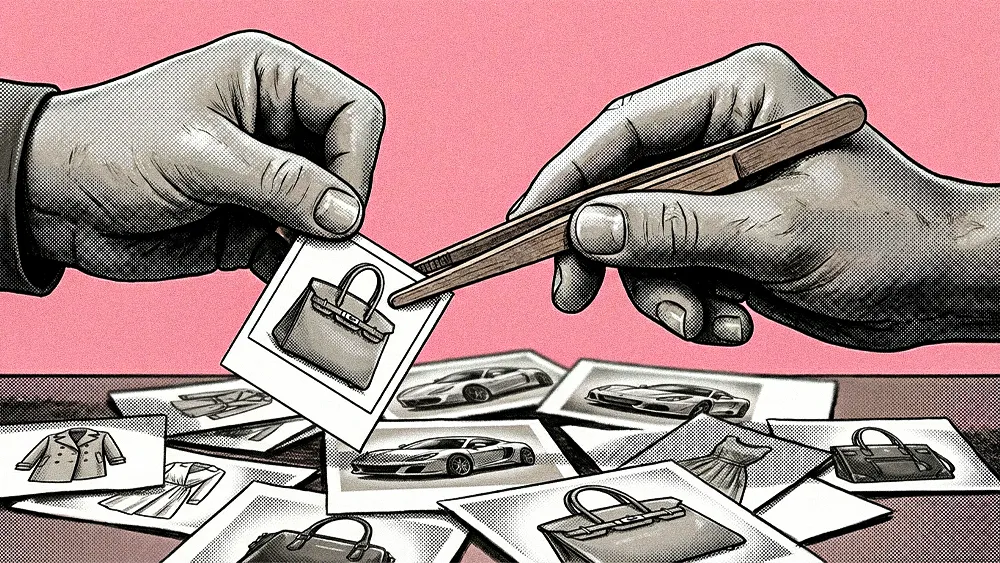
On brand duty: The guard’s core function is to protect a brand's integrity by balancing its authenticity with the efficiencies AI offers. Cukurs notes that even high-profile experiments, like the Coca-Cola AI video, required extensive human intervention and VFX hours to manage, highlighting the continued need for human oversight. "With AI creating endless variations, creative directors need to have the criteria to check what can be used and what cannot," he says. "It is their role to be the 'brand guard' who protects the integrity and sense of the brand."
The role extends beyond creative taste into navigating client compliance and internal caution. Cukurs explains that his team is actively experimenting with AI within company policies while continuing to look for responsible ways to expand its use. The work requires a strategic eye for small opportunities where AI can be tested, measured, and proven valuable without compromising established standards.
Reading the room: The tension is common, forcing creative leaders to work in a climate where some clients have strict "compliance layers" resisting AI, and others are eager to experiment, inspiring debate over ads generated at scale. "Some clients have a layer of compliance that makes them resist AI, so you need to keep a more traditional approach. Other companies are open to trying and testing everything," notes Cukurs. "You have to recognize that every case will be different."
Brand before trend: His charge to executives for the coming year is built on three pillars. First, "keep pushing the boundaries a little." Second, "keep it human," because people need to connect with the message. And third, "stand for what your brand believes." He points to Jaguar as an example of a brand that, in his view, tried to push boundaries so far that it went "completely against what their brand used to stand for." For Cukurs, the implication for leaders is simple: "Push beyond the limits and try different things, but always keep your brand's sense and its core intact."
Ultimately, Cukurs says the goal is to protect the "brand soul." In his model, the brand guard’s function is to make sure that no matter what tools are used, the destination remains the same. "Use technology only to help you get where you want to go, not the other way around," he concludes. "Don't focus on the technology and forget the mission you are trying to accomplish."