
How Maintaining 'Creator DNA' Within Isolated AI Creative Work Helps Teams Stay Collaborative
Marco Santiago, Writer-Director, and Founder of Stackwright, says AI can collaborate in the creative process, helping generate concepts, surface opportunities, and organize thoughts without replacing the creator’s guiding vision.
Make Ad World News one of your go-to sources on Google


Creativity is a collaboration between an individual, a third party, and nowadays more than ever, AI.

Marco Santiago
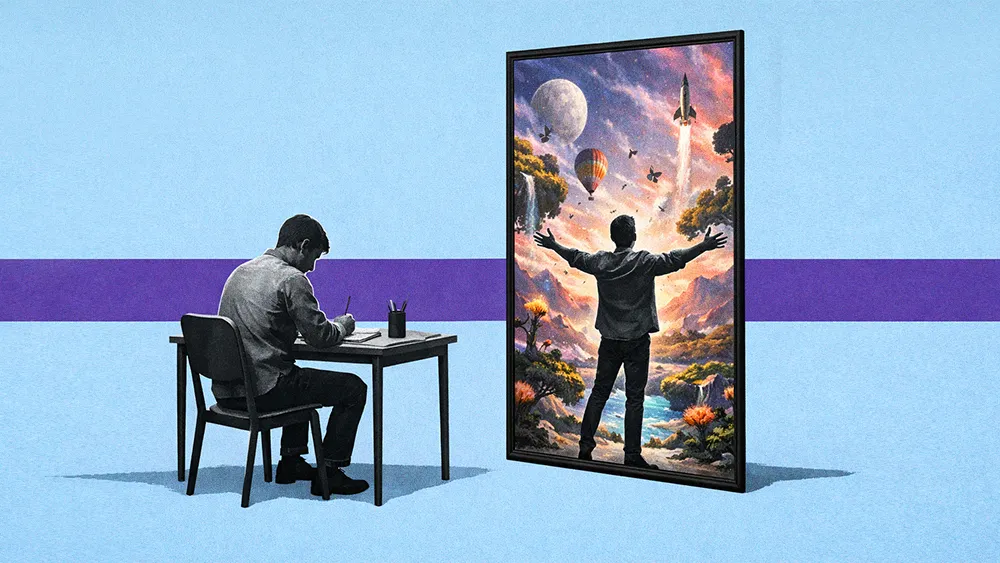
Across Hollywood and advertising, storytellers are collaborating with algorithms to bring ideas to life. Creators are becoming visionaries, directing AI agents to explore scenarios, generate insights, and automate workflows, all while preserving their unique creative voice using their past work as a foundation to build entirely new IP.
Marco Santiago is a Writer-Director and the Founder of Stackwright, an AI-powered application builder, and CEO of ExcelEndeavorMedia, a content production studio. He also produced Water & Power, a feature film developed at the Sundance Institute. With experience across both technology and storytelling, he brings a rare perspective on AI’s role in creativity.
"Creativity is a collaboration between an individual, a third party, and nowadays more than ever, AI," Santiago says. That dynamic is reshaping script writing, with AI serving as a collaborative ideation tool rather than a scriptwriter. "I didn't use it to write the script, but I did use it for analysis, pinging ideas back and forth." He experienced this firsthand developing an AI-assisted screenplay at the Writers Guild Foundation Veterans Writing Project, a lab-style program for military veterans.
Dystopia by design: Doubts about AI must be confronted in order to push the boundaries of storytelling. "I was hesitant because of the prevailing attitudes of AI and creativity, protection of people's images, whether or not AI should be used to create, but I decided to experiment. For my last two screenplays, I used open-ended questions about post-apocalyptic dystopian scenarios to generate amazing ideas, things I wouldn't have thought on my own," he says. His experiments revealed AI’s potential and the delicate balance of preserving originality, a tension many in the industry navigate.
Silent revolution: "I spoke to Oscar-nominated writer-directors and producers who are well-established mentors. The secret is that a lot of them are using this tool, but many still won't admit it," Santiago explains. With adoption spreading quietly, the next concern is protecting the originality that makes each voice worth preserving and turning it into new IP.
DNA Originality: Santiago built a proprietary tool called Stemma, using Stackwright as the base. "It consolidates a creator's work into a graph database, making it unique and locking it on a blockchain. I use Neo4j and Vercel; everything else, including my CRM, I created by adapting others' ideas and managing my own workflow process. With AI, I don't need to subscribe to an application; I can create it myself," Santiago highlights.
Once an artist’s work is preserved and mapped, it becomes possible to see the unique qualities that define their craft. "The concept I like thinking about is 'terroir,' a French term and a metaphor for the uniqueness of a vineyard. Every wine is unique because it grows in a specific place and time, and I like to think of a creator the same way," Santiago illustrates. Understanding those distinctive traits allows their work to extend beyond the individual, into collaborative projects.
Leasing mindflow: "A filmmaker or writer can license their creative essence or persona to third parties, who can use it for a defined period to create new work. Two creatives could also combine their databases to generate more distinctive future projects," says Santiago. That principle extends to managing an individual's identity across multiple channels.
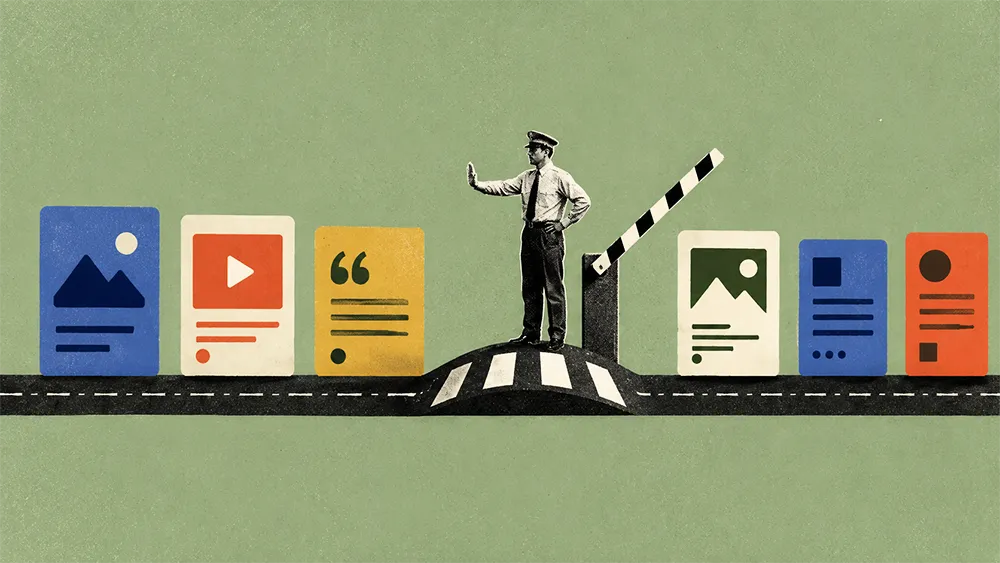
Channel choreography: "A commercial that works on YouTube, doesn't necessarily work on LinkedIn, and TikTok has its own content requirements," Santiago explains. Navigating these differences requires a smarter, more adaptable workflow. "If a platform can pull all that information together and create content tailored to each platform, leveraging its strengths, that’s where I see things going. AI agents could take on those roles, govern the workflow, handle approvals, and release it for final client sign-off." Making sense of diverse inputs requires skillful interpretation and insight.
Mr. Syntax: Santiago points to Nvidia CEO Jensen Huang’s widely cited phrase, "the revenge of the English major." "Coding is not the purview of coders anymore," Santiago says. "Now it’s about the sophistication, the use of English, and the information you can draw from, especially if you have diverse background and interests, to use metaphors and create something new." This shift in skill sets sets the stage for AI to move from a tool to a creative partner.
By preserving past work, understanding what makes their artistry unique, and experimenting with new possibilities, they can push ideas further than ever before. Santiago sees a future where writers and directors guide intelligent systems to explore, suggest, and shape concepts, while their own vision remains at the center. He concludes, "AI doesn't replace imagination, it amplifies it. The more you understand your own creative DNA, the more powerful the ideas AI helps you unlock."