
Gen Z (21+) really does want products that suit them. They want them to be authentic to them, and it doesn’t necessarily have to be a brand that’s been around for a number of years for it to really resonate.
 Kaleigh TheriaultDirector, Beverage Alcohol Thought Leadership @ NielsenIQ
For decades, alcohol brands could count on habit to do much of the heavy lifting. Consumers inherited familiar labels from parents, ordered the same drinks every weekend, and built routines that rewarded scale and repetition. Gen Z's of legal drinking age are disrupting that formula. Younger legal-drinking-age consumers are still participating in the category, but their behavior looks far more selective and occasion-driven than previous generations. Weeknight drinking occasions are shrinking while premium purchases tied to social experiences continue gaining traction. The result is a consumer base that forces alcohol marketers to rethink everything from targeting and pricing to packaging and positioning.
Kaleigh Theriault, Director of Beverage Alcohol Thought Leadership at NielsenIQ, analyzes how generational behavior is reshaping the economics of the alcohol industry. During her decade at the consumer intelligence company, including six years focused specifically on beverage alcohol, Theriault has worked closely with brands trying to understand why traditional growth assumptions no longer apply as cleanly to younger consumers. In her view, many companies still frame Gen Z (21+) through overly simplistic narratives around declining consumption, while missing the more important shift happening underneath: younger adults are becoming far more selective about where, why, and how they spend within the category.
"Gen Z (21+) really does want products that suit them. They want them to be authentic to them, and it doesn’t necessarily have to be a brand that’s been around for a number of years for it to really resonate," says Theriault. For many younger consumers, moderation is less about abstaining completely and more about concentrating spending around experiences that feel worth it. That dynamic is shifting parts of the alcohol market away from value positioning and toward experience-driven consumption, where vibe, flavor, and occasion-fit carry more weight than legacy recognition alone. "In a lot of cases, alcohol tends to be a 'treat occasion'. It's like getting an ice cream cone or eating a cookie where somebody's going to indulge in the real deal," Theriault notes. "Even when they are purchasing alcohol, it tends to be more premium products. They are choosing to drink better when they do choose to drink."
Winning the first drink
Younger consumers are also far more open to experimenting with unfamiliar brands, flavors, and formats. That flexibility is creating new opportunities for smaller and more agile alcohol companies that can move faster around trends, aesthetics, and occasion-based marketing. In response, many brands are shifting away from broad demographic campaigns and leaning harder into culture-first strategies built around social relevance, modular creative, and omnichannel visibility across connected TV, TikTok, and experiential events. The goal is increasingly to show up naturally inside the moments surrounding drinking culture rather than relying on decades of legacy awareness to carry the brand forward.
Ready-to-drink products fit especially well into that experimentation mindset. Instead of committing to a full bottle or learning complicated cocktail recipes at home, younger consumers can casually sample different spirits, flavors, and formats directly from the cooler. The convenience lowers the risk of trial while making alcohol feel more flexible, social, and accessible across a wider range of occasions. "As a Millennial, I sometimes tell Gen Z (21+) they don't realize how lucky they are with the number of choices they have," Theriault says. "The proliferation of ready-to-drink products gives them the ability to try many different malt, wine, and spirit-based products without having to buy a full 750ml bottle and mix their own cocktails. It takes the guesswork out of it."
For brands, those changing behaviors make placement and occasion-fit increasingly critical. Success is becoming less about blanket visibility and more about appearing in the specific bars, restaurants, festivals, and retail environments where younger consumers are actually making decisions in real time. Theriault says that dynamic is especially important for niche products competing in a market where younger buyers are highly willing to substitute one brand for another based on convenience, availability, or mood. "When we talk about the success of a brand in a bar or restaurant, it's always about winning the first drink," she explains. "You're not necessarily in every venue, especially as a niche product, so it's about ensuring you're at the right places that align with Gen Z (21+). If a similar alternative is available, they might be willing to try it."
The "treat occasion" economy
Forecasting data suggests the Gen Z (21+) alcohol story is less about decline and more about redistribution. Younger consumers currently devote a smaller share of their spending to alcohol than millennials did at the same age, but long-term projections still point to Gen Z (21+) becoming a higher-spending generation overall. In practice, that means overall alcohol volume may soften while premium dollar spend continues growing over time. "When we equivalize Millennials at that same 21-to-25 age range, Gen Z (21+) will always lag in their share of spend. But what we find is that they're going to be a generation that is a richer generation or a higher-spending generation overall in the long term," Theriault says. "Their actual dollar spend is going to be higher than Millennials at many of those age points."
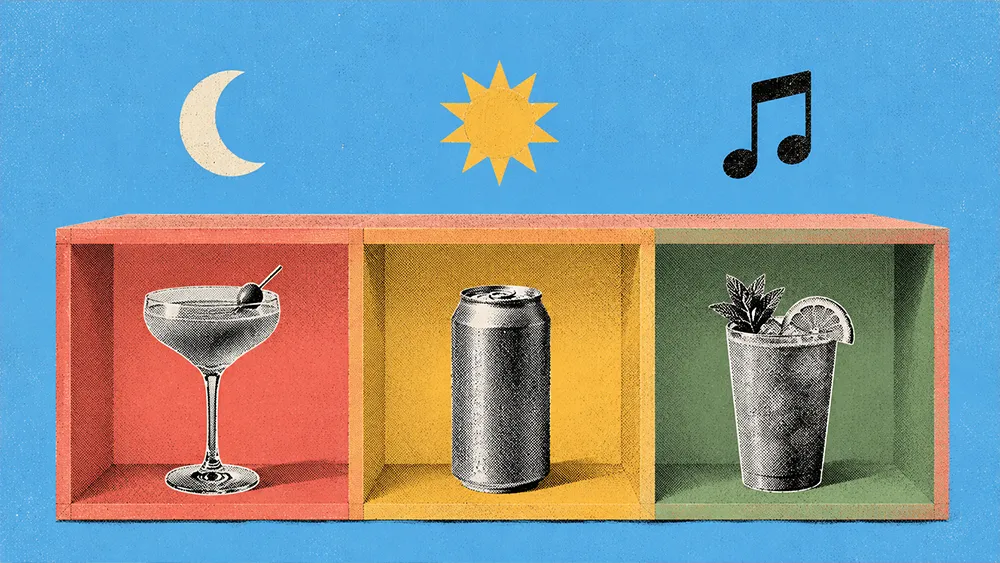
Meanwhile, alcohol now competes inside a much broader "treat occasion" economy. Premium cocktails sit alongside non-alcoholic alternatives, adaptogenic drinks, nootropic beverages, and THC products all competing for the same social moments and wellness-oriented consumers. That expanded competitive set makes broad category dominance harder to maintain, especially as younger buyers become more selective about occasion-fit and personal values. Strict TTB and FDA rules also limit how directly alcohol brands can market wellness benefits, forcing companies to get more creative with packaging, ingredient positioning, and secondary messaging. "It's really tough in the alcohol industry because of how the TTB and the FDA approve products. You can't state electrolyte or protein on the can itself, but some brands are finding workarounds," Theriault notes. "You can put it on the package, like the cardboard box, but not on the can. They're finding ways to show consumers they're a fun product that also aligns with the specific wellness attributes buyers are looking for."
Owning the moment
As alcohol consumption becomes more occasion-driven, beverage companies are rethinking how broad their portfolios need to be. Many major brands now offer non-alcoholic extensions of flagship products alongside low-ABV alternatives designed to sit between zero-proof and full-strength options. The strategy gives consumers more flexibility to moderate within a familiar brand ecosystem instead of leaving the category entirely. For marketers, the larger shift is forcing a move away from blanket demographic targeting and toward designing products, messaging, and experiences around highly specific moods, settings, and consumer identities.
Across the beverage industry, the brands gaining traction increasingly understand which occasions they can credibly own and which ones they cannot. Some companies are building broad beverage portfolios capable of following consumers across multiple social moments, while others are narrowing their focus around a single drinking occasion they can dominate authentically. In both cases, relevance has become more valuable than sheer scale or legacy recognition alone. "A broad portfolio play is what some brands have opted for by having the alcohol and the non-alcohol version," Theriault concludes. "In other cases, brands are realizing they just need to focus on winning a very specific occasion, and that's what they're good at. You have to pick your lane. Being everything to every consumer isn't a winning strategy anymore."