
Without More Franchise IP, Netflix Risks Becoming a Revolving Door for Subscribers
STUCK IN MOTION's Tommy Shull believes Netflix's Warner Bros. exit exposed a franchise gap that one-off cultural hits alone cannot close.
Make Ad World News one of your go-to sources on Google


Netflix is really well set up on the brand integration side. They know how to take a franchise and extend it into consumer products and partnerships—they just need much more of those long-lasting franchises to fully take advantage of it.

Tommy Shull
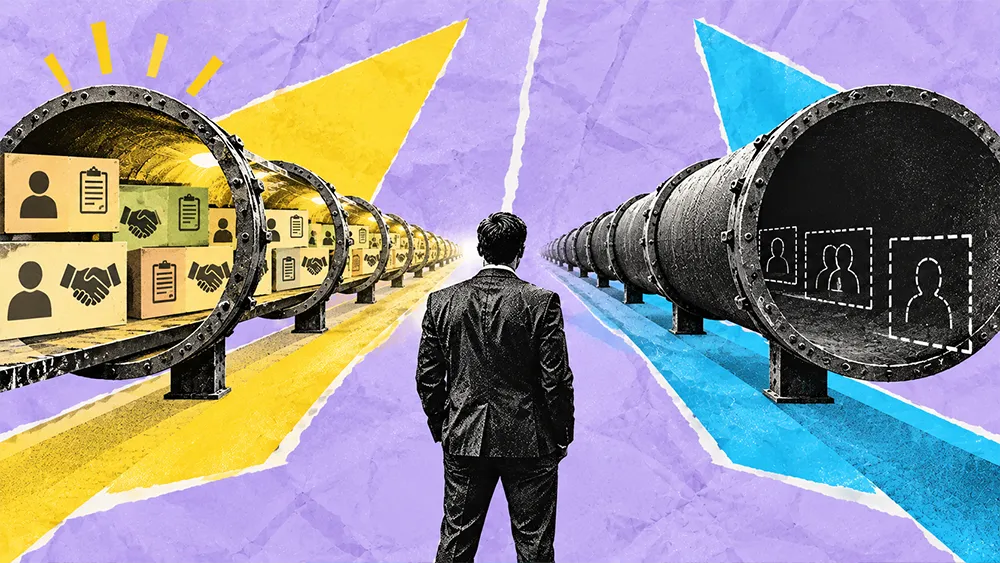
Netflix is one of the best in the business at breaking through culture. From Tiger King to Baby Reindeer to Wild Wild Country, they're no strangers to producing works that get the whole world talking. The problem is what happens after. The conversation ends, the subscribers who came for that show either look for something new or leave, and the cycle starts over. That's a revolving door. Netflix’s decision not to pursue the Warner Bros. catalog in Paramount’s $111 billion bid puts a spotlight on a structural challenge at the center of its business.
Tommy Shull has a front-row seat to how the streaming wars are actually being fought. As Principal of STUCK IN MOTION, an award-winning creative studio, he has worked for artists like Beyoncé, Jay-Z, and U2, and produced campaigns for global brands and major studios. His team has also developed content for Upfronts in partnership with networks and platforms. He sees some of Netflix's structural challenges starting to come into focus.
"Netflix is really well set up on the brand integration side. They know how to take a franchise and extend it into consumer products and partnerships—they just need much more of those long-lasting franchises to fully take advantage of it," Shull says. That gap traces directly back to the Warner Bros. bid. "It became a cost-to-value decision, but it's ultimately bad for Netflix. Paramount made it too expensive for them." But the catalog would have delivered built-in fan bases and IP that keeps subscribers locked in, in a market where, as Shull puts it, "30 to 40% of streaming subscribers cancel at least one service per year." That churn is behavioral.
Here today, gone tomorrow: "Audiences follow shows, not platforms," Shull explains. He recently lived that pattern himself, canceling his Netflix account after a second price increase. "I'd already watched what I wanted." He moved to HBO to work through a backlog of deeper series. "As the IP stacked, I found a subscription that worked, and bunkered down." The irony is that Netflix is still one of the best at driving cultural moments.
Hit in one go: "Netflix often produces something the whole world talks about. The problem is what happens after. The conversation ends, the subscribers who came for that show leave, and the cycle starts over," Shull adds. He points to Tiger King as a defining example. "He 100% impacted culture and is now defined in the pandemic era forever. But what creates a franchise is a fan base that they can connect to, that breathes life and continues on beyond that single season." This is something far harder to sustain in the docu space.
Doc-makers need not apply: Paramount didn’t bring on the Duffer Brothers to make one-off docs, says Shull. They’re looking for their version of Stranger Things. That shift, from one-off hits to franchise-building, is where the market is heading. And while Netflix is preparing for that future, it doesn't yet have the content to fully support it. "House of Netflix is opening up left and right. It was designed as a modular system, rotating IP to keep the experience current." That kind of extension beyond the screen is what Disney has mastered and what Paramount has long done with franchises like Mission Impossible, Teenage Mutant Ninja Turtles, Spongebob, StarTrek, and Taylorverse, turning them into revenue engines. Netflix is expanding toward the same model, but without the depth of IP to make it work at scale.
"You’re not going to see Baby Reindeer in the House of Netflix, you’ll see Stranger Things and K-Pop Demon Hunter. I'm sure they were excited to add Batman, Game of Thrones, and Harry Potter, but they now don't have any of that," Shull emphasizes. At the same time, Netflix is also betting on production. The company recently agreed to acquire Ben Affleck’s AI firm for a reported $600 million. "Is it worth that? Would that deal have happened before the $2.8 billion breakup fee? Did that change things? I don’t know. But everyone is embracing AI and figuring out how to show up." Still, without content, neither retail nor production solves the core problem, and developing originals "take time, incubation, and isn't always successful."
The creator casino: Shull points to Stranger Things, which has spanned five seasons over nearly a decade. "That’s not typically how franchises are optimized today. You see a more consistent cadence to keep them active," he highlights. Renting IP from studios like Sony is one possibility, but the bigger shift is the growing a battle for the creators who can build franchises in the first place. "If you've proven you can create a franchise or a catalog of hit shows and spin-offs, there's going to be a lot of money for creators who can come in and develop something at scale." That war is already being waged.
Top of the empire: "Nothing’s a better indication of that than NBCUniversal spending a billion dollars on Taylor Sheridan," Shull notes. At Paramount, former executive Chris McCarthy was “notorious for giving Taylor Sheridan what he needed." The result: a sprawling Yellowstone universe that drew talent like Helen Mirren, Harrison Ford, Michelle Pfeiffer, and Kurt Russell. "Getting a great creator and giving them what they need to succeed increases your chances at getting a good franchise and attract star talent." That talent pipeline is already shaping how studios sell to advertisers.
Netflix is not short on infrastructure, ambition, or cultural reach. What it's short on is the kind of deep franchise IP that turns a subscriber into a fan and a fan into someone who never cancels. Disney built that over decades. Paramount has PAW Patrol, a sprawling Yellowstone universe, and a creator in Taylor Sheridan who keeps delivering. Netflix has a $2.8 billion breakup fee and a development pipeline that takes time. The platforms that dominate the next era of streaming will be the ones that locked in world-building creators before everyone else realized what they were worth. "You have to make these decisions when you're on top, not make these decisions when you're on the back foot," Shull concludes.