
The World Cup's Sixteen Host Cities Are Creating One Big Local-Business Gold Rush
The 2026 World Cup hands eleven American cities six weeks of concentrated attention. Capturing it has less to do with the stadium than with the screens around it.
Make Ad World News one of your go-to sources on Google


For the first time, the FIFA World Cup is being played at scale on home soil: 104 matches across sixteen North American cities, with the United States hosting 78 of them and eleven U.S. metros serving as hosts, from Los Angeles and Miami to the New York–New Jersey corridor that will stage the July 19 final. The global sponsors and their nine- and ten-figure budgets will dominate the broadcast. The more interesting story is playing out city by city, with eleven U.S. markets getting their own version of a Super Bowl surge, stretched across six weeks.
A local gold rush
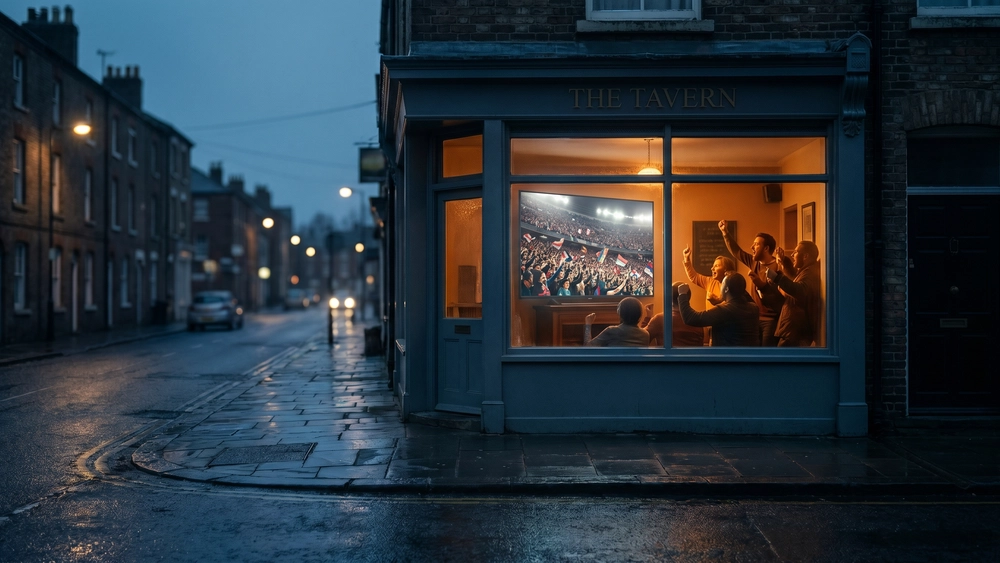
The local energy is already organized. Host committees and chambers of commerce across the host markets are actively encouraging small businesses to participate, NetChoice reported, with restaurants, bars, retailers, and neighborhood brands leaning on local culture, watch parties, and hyper-targeted promotions rather than sponsorship fees.
New Jersey, anticipating the final, has organized Fan Zones across Jersey City, Newark, Secaucus, and the Rutherfords with live broadcasts, food, and music. Delaware's tourism office has signed on as a promotional partner to host city Philadelphia and is staging statewide watch parties. Even the broadcasters are working the community angle: Comcast NBCUniversal and Telemundo committed $600,000 in grants to nonprofits across eight host cities. And the demand is regionally concentrated, since host markets like Los Angeles, Miami, Dallas, Houston, New York–New Jersey, and Atlanta already over-index on soccer fandom.
Proximity as the price of entry
But that local enthusiasm comes with a catch. The World Cup is not, by default, a direct revenue engine for small businesses. The profits are largely tied to global corporate sponsorships and broadcast rights, and the clearest spillover flows to businesses physically near the stadiums and fan zones. Proximity, in other words, has been the price of entry: a restaurant two blocks from the venue benefits, while an identical one across town watches the fan energy pass it by.
That's precisely the constraint local connected-TV advertising removes. A business doesn't need stadium signage, a FIFA package, or an address near the pitch to reach the fans gathering in its city. It just needs to buy its own metro on the screen, which has become as affordable as it is precise. Shoulder programming around the matches has run at roughly $30 to $40 CPM, about half the cost of advertising on Fox during the games, while smart-TV home screens and geofenced targeting let an advertiser concentrate spend on the exact neighborhoods where its customers live. The locality that used to determine who benefited becomes, on CTV, simply a targeting setting.
Backyard branding
The economics underneath are substantial. WARC projects an additional $10.5 billion in global ad spend in the second quarter alone as the tournament runs, and FIFA's own sponsorship program is expected to clear $1.8 billion. Most of that is spoken for by the brands on the perimeter boards. But the tournament also produces something money cannot pre-book: six weeks of concentrated, local attention in eleven American cities at once.
The businesses that convert that attention into customers will not, for the most part, be the ones with their logos in the stadium. They will be the ones who recognized that the audience was in their own backyard, and bought the screens their neighbors were already watching.