
Streaming's Path Past Churn Runs Through Membership Thinking
Jean Carucci, streaming media strategist and Principal Owner at Carucci Consultants, explains why churn cannot be solved with content spend and how membership thinking unlocks the next phase of growth.
Make Ad World News one of your go-to sources on Google


We need to shift the paradigm. What we're doing is using that legacy linear loyalty model and thinking it applies to streaming and it doesn't. You've got to throw out the book.

Jean Carucci
Streaming's next growth phase depends on solving a problem the industry has so far papered over with content spend and acquisition tactics: churn. In the legacy TV era, securing a viewer meant locking them into high-friction physical commitments, with heavy hardware costs and mandatory three-year satellite contracts handling the retention work. The frictionless app sign-ups that powered streaming's rise now cut both ways, since the same ease that brings subscribers in lets them walk just as quickly. The dynamic has upended traditional marketing funnels and created a persistent retention headache, especially as platforms navigate ongoing mergers and acquisitions and accelerating industry consolidation that exposes how much current strategies still lean on subscriber acquisition over loyalty.
Jean Carucci, streaming media strategist, Principal Owner at Carucci Consultants, and author of The Streaming Strategy Scholar on Substack has watched the churn problem evolve from the inside. Over seven years at Warner Bros. Discovery, she launched 18 different streaming apps including Max and discovery+, and she now advises the industry on digital ad product activations and subscriber retention. For Carucci, solving churn comes down to repositioning users from transactional subscribers into relational members by integrating streaming into their everyday lives.
"We need to shift the paradigm. What we're doing is using that legacy linear loyalty model and thinking it applies to streaming and it doesn't. You've got to throw out the book," says Carucci. In the years since streaming first promised destination viewing, many of the same companies that built their identities around exclusive titles have licensed those titles out to competitors in search of incremental revenue. The strategy generated short-term cash but gradually eroded the exclusivity those platforms once relied on to keep audiences locked in, leaving them to compete on lifestyle utility rather than catalog ownership. "There was a time you couldn't watch The Sopranos unless you had HBO," Carucci says. "Now, they have sold that library to other places. Streamers themselves have given away the exclusivity and brand loyalty because they're making money."
From bundle to rundle
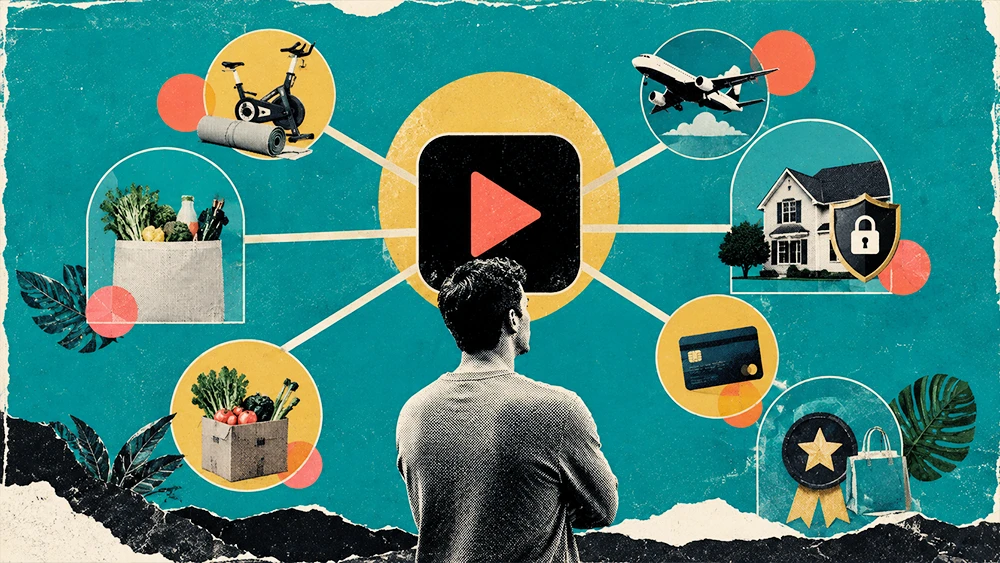
To anchor audiences against churn, several industry players initially turned to vertical bundling within their own portfolios or explored horizontal bundling with rivals. Those early packaging strategies kept the focus inside entertainment, but some strategists argue the next evolution of retention has to extend outside the category entirely, into what's been called a recurring revenue bundle, or "rundle." Adding integrations with home security platforms such as ADT, fitness services like Peloton, or meal kits like HelloFresh creates deeper value for subscribers and makes the service harder to leave. Carucci sees retail as a working model. "Costco requires you to spend at least $60 a year to get a card that lets you walk into that store to spend a tremendous amount of money," she notes, pointing out the retailer's consistent revenue and high loyalty. "What they've done is really offer their consumers benefits above and beyond what's in the box store."
The harder reality for streamers is that they no longer compete only with other streamers. Mobile screen time is now divided across platforms like TikTok and YouTube, which has changed how advertising plays out within these channels and forced platforms to rethink lifecycle marketing from end to end. Building a retention roadmap for that environment often means inserting the brand into real-world moments. Pulling those perks off at scale typically requires cross-industry tracking, similar to how airlines partner with financial institutions to reward everyday credit card spending. "Content may be king, but it's not the only thing," Carucci says. "You've got to acknowledge that technology has afforded us a frictionless journey for the consumer and offer them something above and beyond."
Streamers and advertisers each hold meaningful intelligence about their audiences, which creates an opening to move beyond the generic, inventory-based rewards that defined early retention efforts. Carucci recalls running a "Surprise and Delight" program at DirecTV years ago that offered subscribers three free months of Starz they already had or produced physical magazines no one wanted. With shared data, platforms can predict consumer life stages like planning a wedding or raising young children and collaborate to serve more accurate ads tied to highly personalized, utility-driven offers. "This affords wonderful, deep partnerships with advertisers not only to serve better ads, but to continue to help them retain customers. It's a one plus one equals three relationship," Carucci explains. "If we can collaborate on the data that you know about your consumer, and I know about my subscriber, we can tailor different offers to really resonate with them."
The subscriber-to-member pivot
The membership model only works if the back-end work supports it. Building dedicated retention teams that measure viewer value daily has become a starting point, not a finish line, for the platforms making real progress on churn. The harder work is using all that data to recreate something streaming has been missing since it replaced linear TV: a sense that audiences belong to the service, not the other way around. For Carucci, even the vocabulary tells you whether a platform has gotten there. "When you subscribe, that's a transaction," she explains. "When you're a member, you belong to something that is a badge of honor. There's something exclusive about it. And who doesn't want to feel like they belong? Everyone does."
The path forward for streaming companies runs through that distinction. Platforms that turn audience data, lifestyle utility, and advertiser partnerships into membership will outlast the ones still optimizing for short-term sign-ups. "What is it we have to do from a streaming standpoint to create members versus just having subscribers? If we as an industry can understand and unlock that, that's a win-win," Carucci concludes.