
The Local Ad Market Is Growing 8.1% This Year. Take Political Out and It's 2%.
Political advertising will deliver a record year, then leave local media selling into a pessimistic SMB market where former clients must be re-acquired.
Make Ad World News one of your go-to sources on Google


Ad World News is funded by Waymark, which sells AI video production tools to media companies, agencies and ad platforms. Waymark hosts a session on premium video creative for SMB advertisers on September 30. Details and registration.
BIA Advisory Services projects local advertising will grow 8.1% this year, to $184.5 billion. It's the strongest headline figure local media has posted in years, and almost none of it repeats next year.
What the number contains
Political spending will contribute roughly $8.4 billion of that total, spread across broadcast, cable, CTV, radio and direct mail. AdImpact projects total 2026 political advertising at $11.6 billion, which would make this the most expensive midterm cycle in American history and put it ahead of the 2024 presidential year. Broadcast takes about $5.6 billion, connected TV about $2.6 billion.
Remove the political money and the picture changes. BIA puts core local advertising, with political excluded, at 2% growth, rising from $172.7 billion to $176.1 billion. The firm separately forecasts core over-the-air television revenue declining year over year once political is stripped out, as dollars continue moving to connected TV and digital.
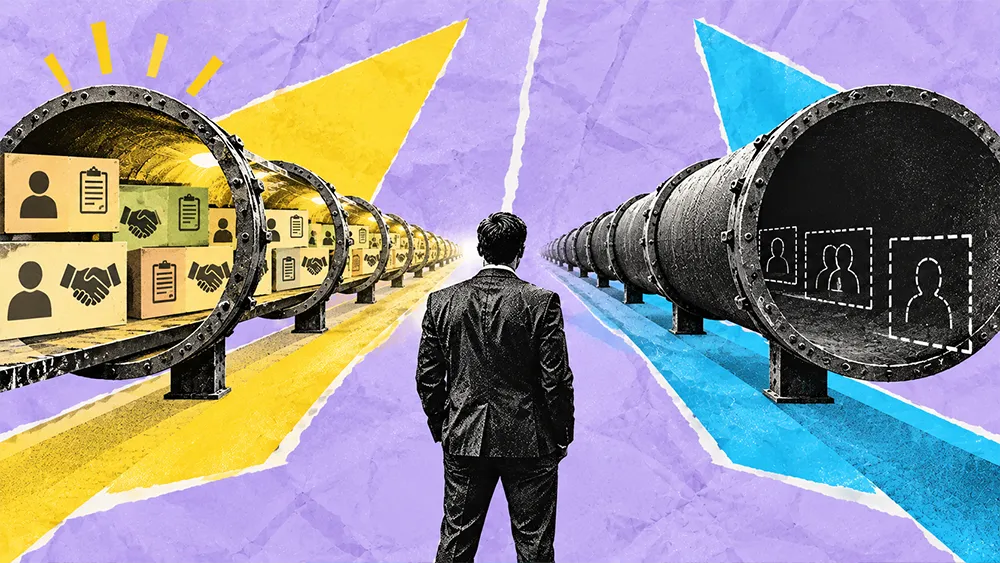
The forecast describes two different markets. One grew 8.1% and stops on November 3. The other grows at roughly the rate of inflation and keeps going.
The buyer on the other side is not optimistic
Whatever local media sells into in January, it will not be a confident market.
Borrell Associates, which surveys roughly 10,000 small and mid-sized businesses annually, found 45% of respondents expecting economic conditions to worsen over the following six months, against 16% expecting improvement. Executive VP of Local Market Intelligence Corey Elliott reported the figures in a briefing previewing the 2026 market. Borrell's own forecast for total local advertising growth this year is 3%, well below BIA's headline. The two firms use different methodologies, and the gap between their numbers is roughly the size of the political money.
The same briefing found local advertisers becoming more self-directed. Chief executive Gordon Borrell reported that 10% already turn to AI for media recommendations, including on traditional media, with another 23% considering it.
The re-acquisition problem nobody is modeling
The revenue cliff is the part of this that gets discussed. The harder part is what political season does to the account list on the way through.
Political money displaces rather than adds. Advertisers get bumped, moved to less desirable inventory, or dropped down a rep's priority list while the cycle runs hot from Labor Day to Election Day. Some ride it out. Others use those ten weeks to find out their marketing works without television.
In January, every one of those accounts is a first meeting again.
So the category is growing at 2%, the buyer is pessimistic, and the pipeline is loaded with advertisers who have to be re-sold rather than renewed. Re-acquisition costs more than retention in any category, and considerably more when the product is discretionary and the buyer has just spent a quarter without it.
What a first meeting now requires
Ad World News reported last week that the local media pitch has changed shape. Advertisers who can generate a passable spot for themselves in minutes no longer evaluate a proposal against a competitor's proposal. They evaluate it against what they already have.
That matters more in a re-acquisition cycle than a normal one. A renewal runs on relationship and results history. Re-acquisition depends on whether the seller can show the advertiser something worth coming back for.
None of this is new in outline. Local media companies pivoting to CTV revenue need advertisers with CTV-ready creative, and the local businesses driving that growth mostly arrive without it. Political season has covered that gap for most of this year, because political creative arrives finished and pays cash. The cover goes in November.
What to do with the fourth quarter
Political revenue for the rest of this year is largely set by the calendar and by which races stay close. The planning question worth arguing about is what the sales organization looks like on January 5, and whether it can run a re-acquisition motion against a market growing at 2% with buyers who expect conditions to get worse. Every station group and platform in the country is about to find out how many of its local accounts were relationships and how many were habits.
Relationships survive a political season. Habits don't, and winning those accounts back will take a first meeting that shows the advertiser something they can't make themselves. Waymark's session on premium video creative for SMB advertisers runs September 30, five weeks before the political money stops. Details and registration.