
The winners of our times are reductionists.
 Pelle SjoenellChief Creative Officer @ NLS
Overloaded briefs drain the power out of good advertising, and reduction is what rescues it. Across more than a thousand film entries at Cannes Lions 2026, the same failure kept surfacing. Talented teams take a sharp idea and pile competing messages on top until the point disappears.
Pelle Sjoenell watched it happen, entry after entry. He served as Film Jury President at Cannes Lions 2026 and is the Worldwide Chief Creative Officer at NLS, with earlier posts as chief creative officer at Droga5, the first to hold that title at Activision Blizzard, and founder of BBH's Los Angeles office. That range gives him a blunt read on why so much promising work comes apart before it reaches an audience.
"The winners of our times are reductionists," Sjoenell says. Why so few pull it off, he thinks, comes down to how the advertising business is built.
Selling hours, losing ideas
Sjoenell thinks the creative work is as strong as ever, and sees the problem in how agencies charge for it. As media buying peeled away from creative over the decades, agencies moved toward billing by the hour, the way law firms do. That model hands idea ownership to the brands, so agencies get paid for their time while the work they dream up belongs to the client. For Sjoenell, the same trade explains the consolidation of holding companies today.
"We looked around and said, who's making money? Lawyers seem to be doing great. They know the law, we know brand building, so let's charge that way. But that was the problem. So all these big consolidations that are happening, where you see the holding companies struggling to keep great agencies and brands alive, that is not because of the product. It's not because of the ingenuity of the great ideas and people who are making great things for brands. It's because of the business model," Sjoenell notes. Selling hours also costs agencies leverage, so they rarely push back when a client keeps adding to the brief.
The cake caves
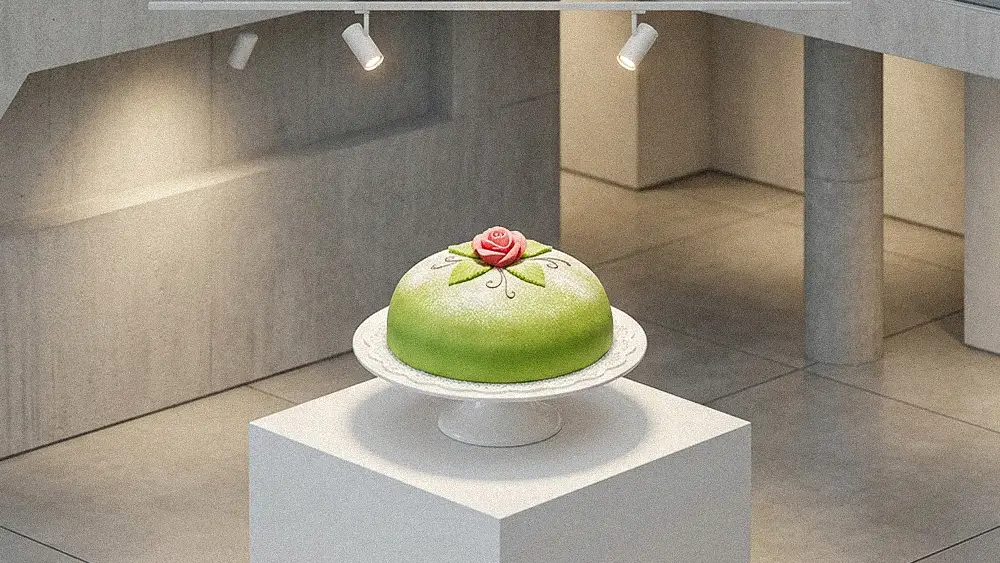
Sjoenell borrows a Swedish saying for the result, cake on cake, or tårta på tårta. It means piling on more of a good thing until it turns into too much. Clients rarely mean to do it, but each new objective they attach to a brief only weakens the message.
"It's common and totally understandable when clients say we need to add more to the brief. They have a New Year's campaign, but they also have to show a new product, and they want to show that you can get a good deal on it. They keep piling things up in briefs until cake on cake becomes the foundation of what you need to work on, which never works," Sjoenell says.
One idea, fully baked
For Sjoenell, the goal is a single idea, and simplicity is beside the point. A great idea can be rich and detailed and still hold one clear thought at its center. He points to Metro Trains Melbourne's "Dumb Ways to Die," where one concept plays out across dozens of executions without ever losing that thread.
Getting there is the hard part. The communicator's real job is to cut away everything that isn't the idea, and that discipline is what separated the winners in his jury room from the rest. "We need to be 160 percent right, because idea and execution aligned means it's one cake. It's a sharpened cake," Sjoenell says.
Credibility needs focus
Focus also earns trust. "If I sit down at dinner and say I'm great at golf, surfing, and painting, you'd figure I'm not good at any of them. But if I say I'm terrible at golf, but I know advertising, you'd believe me," Sjoenell says.
The same math applies to brands. Claim to be good at everything and the claim cancels itself out. Stand for one thing, and people take it seriously, which is the whole return on a disciplined brief. A campaign that makes a single point leaves an audience knowing exactly what the brand is for.
Discipline pays off
That discipline matters more as the tools grow more powerful. AI lets teams make more, faster, and the edge goes to those who pair that power with the judgment to keep a campaign focused on one idea. Sjoenell has watched the best work outlast every technology shift, pointing to Christopher Nolan shooting The Odyssey entirely on IMAX film as a sign that careful craft still moves people.
He is not worried about the disruption. "We rehearsed for this when the internet came, when social came. We're using AI as a great tool companion to make great work, not throwing out our old toys and starting over," Sjoenell says.