
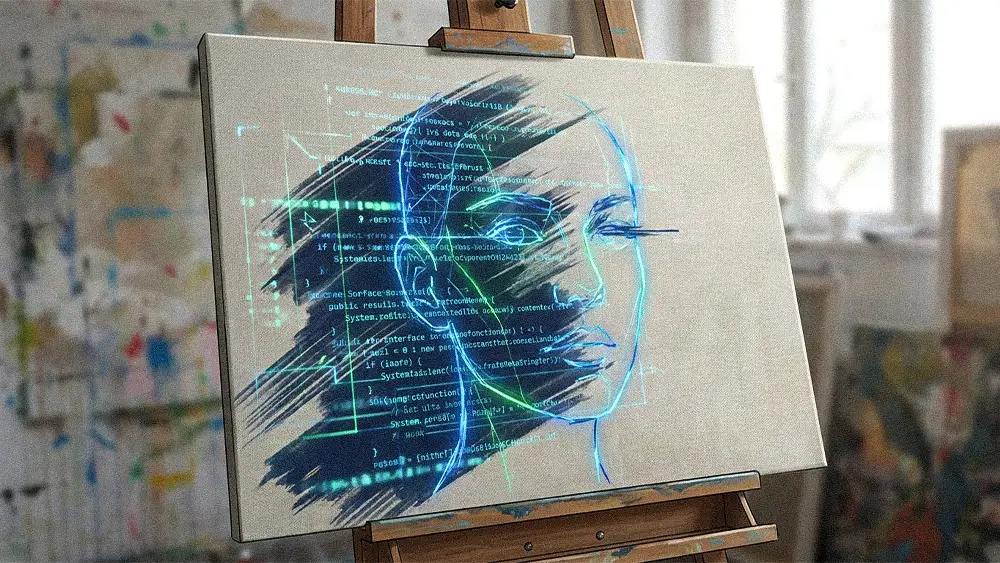
Craft starts long before execution. It begins with curiosity, observation, and the desire to create something that genuinely resonates with people. The more deeply you understand people, culture, brands, design, art, and society, the richer your creative work becomes.
 Rafael GilChief Creative Officer @ Artplan
Execution used to be the bottleneck. Creating polished images, animation, video, and design required specialized skills, expensive equipment, and years of training. The people who controlled these capabilities were the gatekeepers of what could be made. By making finished-looking work dramatically cheaper and easier to produce, AI eliminates that scarcity and forces a fundamental redefinition of what "craft" actually means. If execution is no longer distinctive, then craft can no longer be defined primarily by the ability to operate the tools.
Rafael Gil, Chief Creative Officer at Artplan, served as Jury President for Industry Craft at Cannes Lions 2026, the first year in which AI Craft was introduced as a new subcategory across several craft-led Lions. It was designed to recognize work where human creativity and artificial intelligence come together to create ideas that neither could achieve alone. What he found was a paradox that defines this moment in the industry: technical novelty became indistinguishable almost immediately. Work that felt groundbreaking during submission had already become commonplace by the time the judging room convened. The entries that stood out were those where AI served an idea instead of becoming the idea. Ultimately, the Industry Craft jury did not award a Lion in its AI Craft subcategory.
"Many entries were built around the novelty of the tool itself rather than around timeless creative thinking," Gil explains. "AI evolves at an extraordinary pace. Between the time projects were submitted and when we judged them, many techniques that initially felt groundbreaking had already become commonplace. Technology changes quickly, but enduring creativity doesn't."
What the category revealed
The Cannes Lions rules for AI Craft were explicit: the work had to show that the core concept, execution, or impact would not have been possible without AI. In other words, the AI had to matter to the idea, not merely to the production. The category was designed to recognize genuine craft, artistry and intent, where AI works in service of the idea.
What the jury discovered was that the distinction between "AI as tool" and "AI as idea" was actually a measurement of something else: the presence or absence of judgment. Work where AI was transparent, executing a specific vision without drawing attention to itself, stood out. Work that celebrated the technology instead of the concept fell away. The entries that stood out had somewhere to go beyond the spectacular render or the polished output. They had an observation, a perspective, a reason for existing.
Redefining craft upstream
For most of modern creative history, craft meant technical proficiency. It meant knowing illustration, photography, animation, art direction, typography, how to light a set, how to color grade, how to layer audio. You developed these skills over years, and they were your competitive advantage. They determined what you could make and how it would look.
That definition is collapsing. Not because technical skill no longer matters, but because technical skill is no longer scarce. "I've always belonged to a generation that lived between the analog and the digital worlds," Gil reflects. "As technology evolved, I naturally embraced digital art, 3D, and new creative tools. So experimenting with emerging technologies has always been part of my creative journey. What hasn't changed is my belief that ideas come first." That observation contains the redefinition. Craft has evolved into the judgment that determines what is worth making.
Craft is knowing the difference between what feels safe and what cuts through. Understanding when the first acceptable answer isn't good enough and making meaningful creative choices about what to reject. Having enough visual literacy to know the difference between a polished execution and an idea with something to say. Possessing the taste to direct tools toward a specific vision rather than simply accepting their default output.
These skills have always been the actual source of value, but they were never thought of as such because they were entangled with technical proficiency. Judgment and taste looked like they were part of execution. Now that execution is abundant, what was always valuable becomes undeniable.
Why traditional disciplines matter more, not less
This reframing changes what certain foundational skills are actually for. Photography, illustration, design, storytelling, art direction, visual literacy. These aren't things you learn so you can do the work yourself. They're things you learn so you can make better choices about what work is worth doing.
Traditional creative disciplines train the eye. They develop judgment. They give you the vocabulary to recognize when something is visually competent but culturally generic, when it fits the brief but misses the actual insight.
"Craft starts long before execution," Gil says. "It begins with curiosity, observation, and the desire to create something that genuinely resonates with people. The more deeply you understand people, culture, brands, design, art, and society, the richer your creative work becomes."
The dangerous temptation
The industry split will become visible in how companies respond to this moment. There are two possible paths, and they diverge immediately.
The first path treats AI as compression: same creative process, accelerated and cheaper. Faster iterations, more variations, higher volume, lower cost. That approach mistakes production efficiency for creative progress. It will produce more competent sameness because speed doesn't leave room for the judgment that distinguishes. The timeline shrinks, but the thinking doesn't expand to fill the space that execution used to occupy.
The second path treats AI as expansion: now that execution isn't the constraint, what is actually worth making? That shift requires a different question at the beginning of every project. It means protecting thinking, not compressing it. It means using the productivity gains not to demand more output, but to pursue ideas that previously weren't feasible.
"I believe the greatest act of resistance is continuing to believe in originality," Gil says. The pressure for the first path is genuine. In an industry that increasingly values speed, efficiency, and minimizing risk, predictable solutions are the default. The truly original idea is inherently risky because by definition it hasn't been done before. That journey is often slower and more uncertain. It demands defending the time and space for exploration, for dead ends, for the unexpected combination of influences that creates something genuinely new. That resistance is what actually separates one idea from the next.
The new creative constraint
The Cannes judging room revealed what becomes possible when production stops being the bottleneck. For decades, the creative industry organized around technical skill and execution capability. AI fundamentally changes that equation by opening a much larger question: what does the industry want to make when it can make almost anything?
The work that stood out at Cannes carried an idea. Now that production barriers are falling, organizations can pursue ideas that were previously constrained by technical feasibility and production cost. That changes where creative teams spend their time, where budgets go, and what agencies are ultimately being asked to deliver. AI has removed the old constraint and moved the creative bottleneck upstream, from the limits of production to the judgment of what deserves to be made.