
Brands Are Still Commissioning Videos When They Should Be Commissioning Footage Libraries
Ultra's William Boyér argues brands waste money on single videos when one shoot, planned around where each piece will run, could yield a year of footage.
Make Ad World News one of your go-to sources on Google


Just making videos for the sake of making videos does you no good. If I make a client a video without any strategy behind it, they're going to look at me like I didn't do my job after it's done.
William Boyér
Most video budgets get spent on a single hero spot a brand hopes will find an audience on its own, which then gets sliced into social cuts once the shoot is over. A production is better measured by how many usable, platform-specific assets the same shoot can produce. Deciding that before anyone arrives on set, rather than in the edit afterward, is what separates a commercial with some leftovers from a shoot that carries a brand for a year or more.
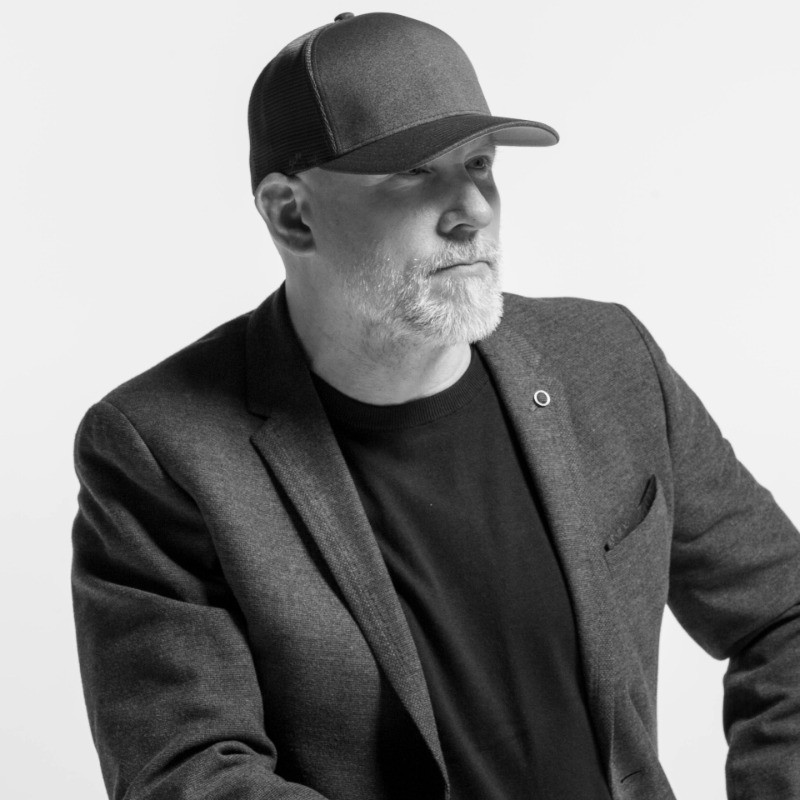
That distinction is the one William Boyér spends most of his time explaining. Boyér is Principal and Executive Producer at Ultra, a production-led creative shop he founded to bring strategic planning into video from the production side rather than the agency side. A five-time Emmy Award-winning executive producer, Boyér spent three decades editing broadcast television for networks including NBC, Fox, HBO, and Showtime before moving between agency and production roles as a producer, director, and editor. On one recent national campaign, he had six shooting days, and the client came away not with a single commercial but with three thirty-second concepts, lifestyle and product photography, instructional footage, testimonials and social content, enough material for roughly one to two years of content, according to Boyér.
"Just making videos for the sake of making videos does you no good. If I make a client a video without any strategy behind it, they're going to look at me like I didn't do my job after it's done," says Boyér. Nearly every client conversation opens with the same four words, "we need a video," and the request rarely says what else the shoot needs to produce beyond the hero asset.
The shoot shouldn't have one job
"'We need a video' is not a strategy," says Boyér. The trouble starts when a brand stops at the first deliverable, before anyone has decided what else the production needs to generate. The crew ends up solving for a single spot when the first question should be what the brand needs to come away with.
The hope buried inside many of those requests is that the video goes up, finds an audience on its own, and does the work of a campaign. Boyér hears that expectation constantly. A brand anthem that goes viral and carries a company on its own is a Nike outcome, not a plan a regional advertiser can bank on. Nike's most famous brand work often sells a brand idea rather than a specific product, and it does so from a position of awareness most companies have not built. Dropped onto a regional business with a fraction of that recognition, the same approach has much less to stand on.
For a regional franchise client, Boyér's objective is different from a global brand's. It needs footage that makes people hungry, much of it built for Instagram, where the restaurant's audience is already looking. A global technology client selling into trade shows needs sales videos, executive testimonials, and platform-specific cuts for the audiences it reaches on LinkedIn versus at a booth. The equipment may be similar, but the shot list changes, and Boyér wants that list settled before the crew arrives.
Distribution is a production constraint
That approach starts in the edit. Shoot the hero film, then cut it into social afterward. Boyér's starts earlier, because the social version changes what the crew captures in the first place rather than what gets sliced out later. The platform and audience change the aspect ratio, the length, the opening, the sound requirements, and how quickly the brand needs to establish what it's selling. If the restaurant lives on Instagram, Boyér doesn't approach the day like a television commercial and figure out the vertical cut later. Instagram changes what he needs to capture.
Working with a biodegradable-technology brand, he mapped where every asset would live before shooting a frame. The plan paired a brand anthem running about a minute and a half with a longer sales video, then a run of executive testimonials shot against a virtual production screen, then platform-specific social cuts sized for LinkedIn, Instagram, and the trade events the company works worldwide. The testimonials were the part the client weighed as important or not, since interviews with their own leadership struck them as the least exciting content on the list. Boyér pushed back. Without that layer of proof, he argues, the flashier anthem has nothing to stand on. Two days of shooting gave him more than 70 videos to work with, and by his account he was not yet halfway through the material.
The old agency model is part of the problem
The missing asset list is, in Boyér's telling, partly a symptom of a missing strategy layer. The thinking that used to sit between a brand and its footage has thinned out, and he sees an opening for production companies to take on more of that planning rather than treating strategy as something that happens upstream and execution as something that happens on set. That is what he built Ultra to close, positioning himself as closer to a one-person agency who assembles a crew around each project rather than carrying a fixed roster.
"I don't think everybody's right for every project," he says, describing why he builds teams to fit rather than running the same designers and directors across every job. The pitch to brands is that a production-first operation can hold both the plan and the execution in one place.
More money won't fix a bad plan
Boyér's view is that budget and efficiency aren't the same thing. A large shoot still wastes money if it only produces one deliverable, and a small one can be efficient if the asset list is built out. He concentrates spend on the camera and the director of photography, the areas he considers most important to making footage look expensive, and lets the creative work cover the rest. "You just have to take what you got and work backwards from there and maintain certain quality moments," he says. He demonstrated the point with eight executives in front of high-resolution virtual screens over two days, coming away with polished testimonial work he treats as routine. The deliverables were established before the executives sat down.
The edit can't create what the shoot didn't capture
The range of assets from the national campaign wasn't created in the edit bay. Boyér says he spent close to a year developing the creative in a pitch deck before those six days, and that planning is what allowed the six-day production to generate a library of assets rather than a commercial and some leftovers. It also gave Boyér roughly one to two years of post-production work, extending the relationship well beyond the shoot itself.
As AI makes it easier to produce more versions, the planning has to account for more output. His concern is less about generating individual pieces than keeping those pieces visually consistent across a campaign, which is why the year-long AI course he is taking focuses, by his account, on building that consistency rather than on writing better prompts. He expects to shoot live footage and composite AI-generated elements into it rather than treat the tools as a cheaper substitute for production.